Question
What do you understand by the concept of weak entity used in data modelling? Explain the relevance of owner entity type, partial key and identifying relationship in the context of such modelling.

Answer

The weak entities refer to those entities which do not have their own key attributes or identities. The weak entities are identified on the basis of their relation with the specific entities from another entity type in combination with some of their attribute values. These other entity types are regarded as identifying or owner entity type. The entity type, whose entities are in relationship with the weak entities are referred to as identifying or owner entity type. This can be described in other words, as the entities which are identified because of their relationship with their parent entity or dominant entity is referred to as weak entities or child entity type (or subordinate entity type), while the parent entity is referred to as identifying entity type.
Accordingly, the relationship through which the weak entity type relates to its owner entity is known as identifying relationship of weak entity. For a unique identification of the weak entity that is related to the same owner entity, a set of attributes is used which is known as partial key. Sometimes, the partial key is also known as the discriminator. This is because it is used to uniquely identify the weak entities that are related to the same parent entity. For example, if we assume that no two children of the same employee have the same first name, then the attribute Name of Children is the partial key that can be used to identify the children (weak entities) that are related to the same employee (owner entity).
Need a full question paper?

Generate a complete, print-ready paper with questions like this in minutes — across 16+ boards, with answer keys.

Start Generating Free

Similar questions

From the following transactions of Kamal, Guwahati, prepare Purchases Book and post into Ledger:
Lalit Mohan keeps incomplete records. From the following information provided by him, prepare a Trading and Profit & Loss Account for the year ended $31^{st}$​​​​​​​ March,$ 2015:$ and a Balance Sheet as at that date:
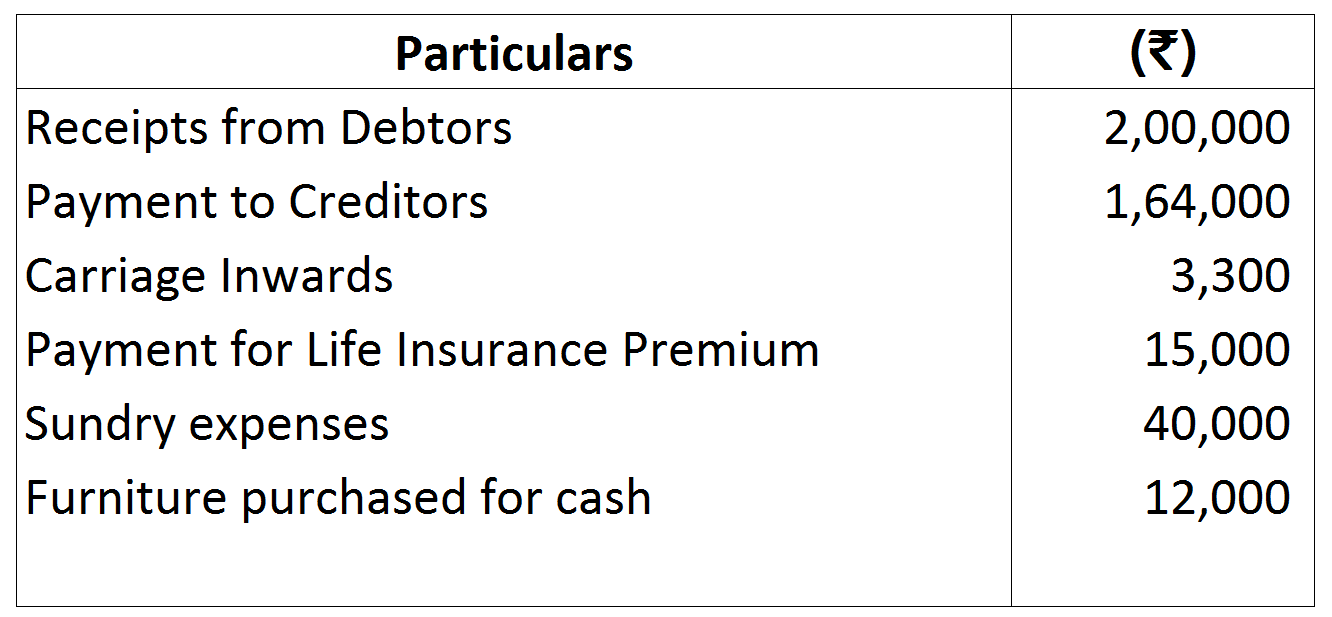
Summary of cash transactions during the year:
You are informed that there were considerable amount of cash sales during the year. Credit purchases during the year amounted to ₹$ 1,80,000.$ Provide $5\% $for doubtful debts on debtors.
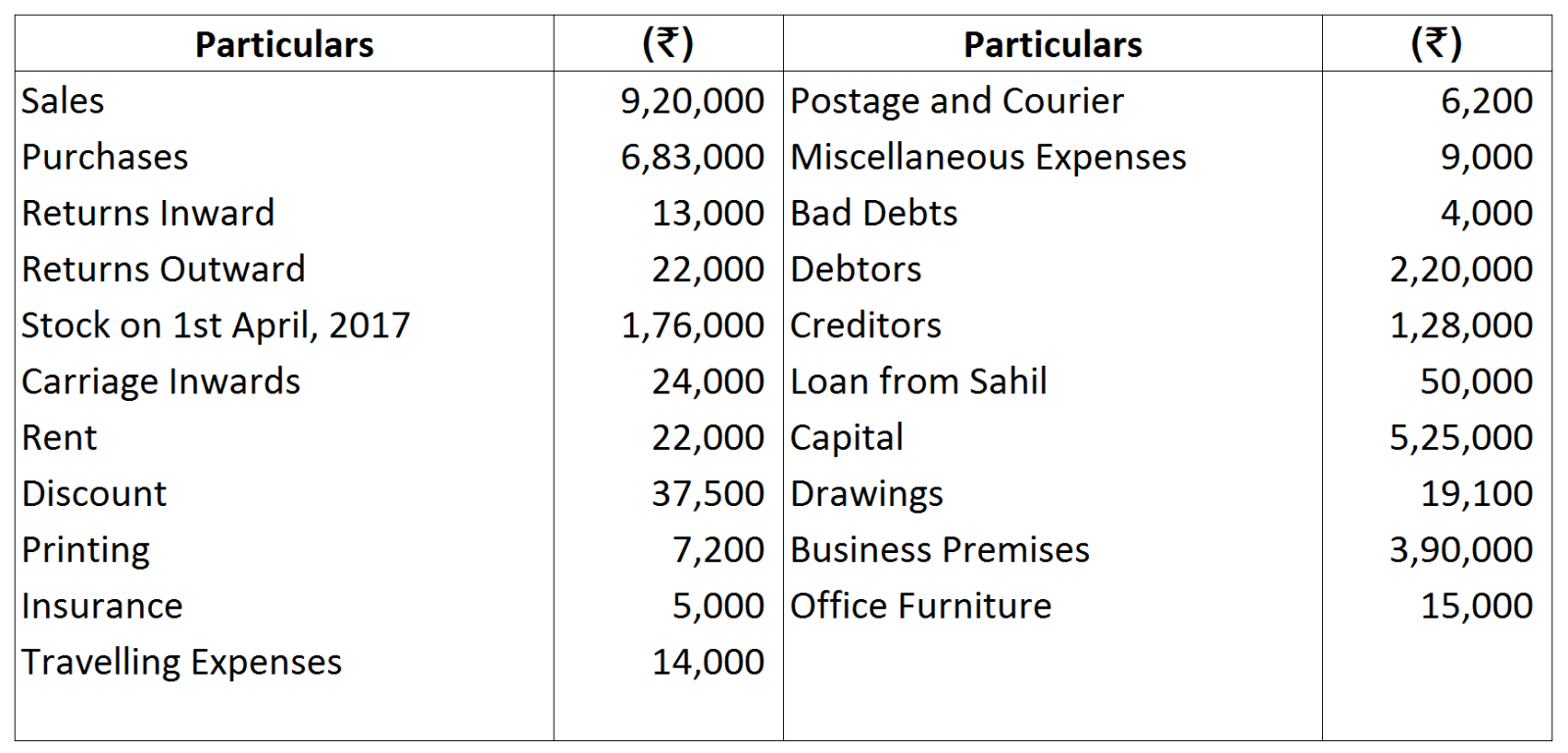
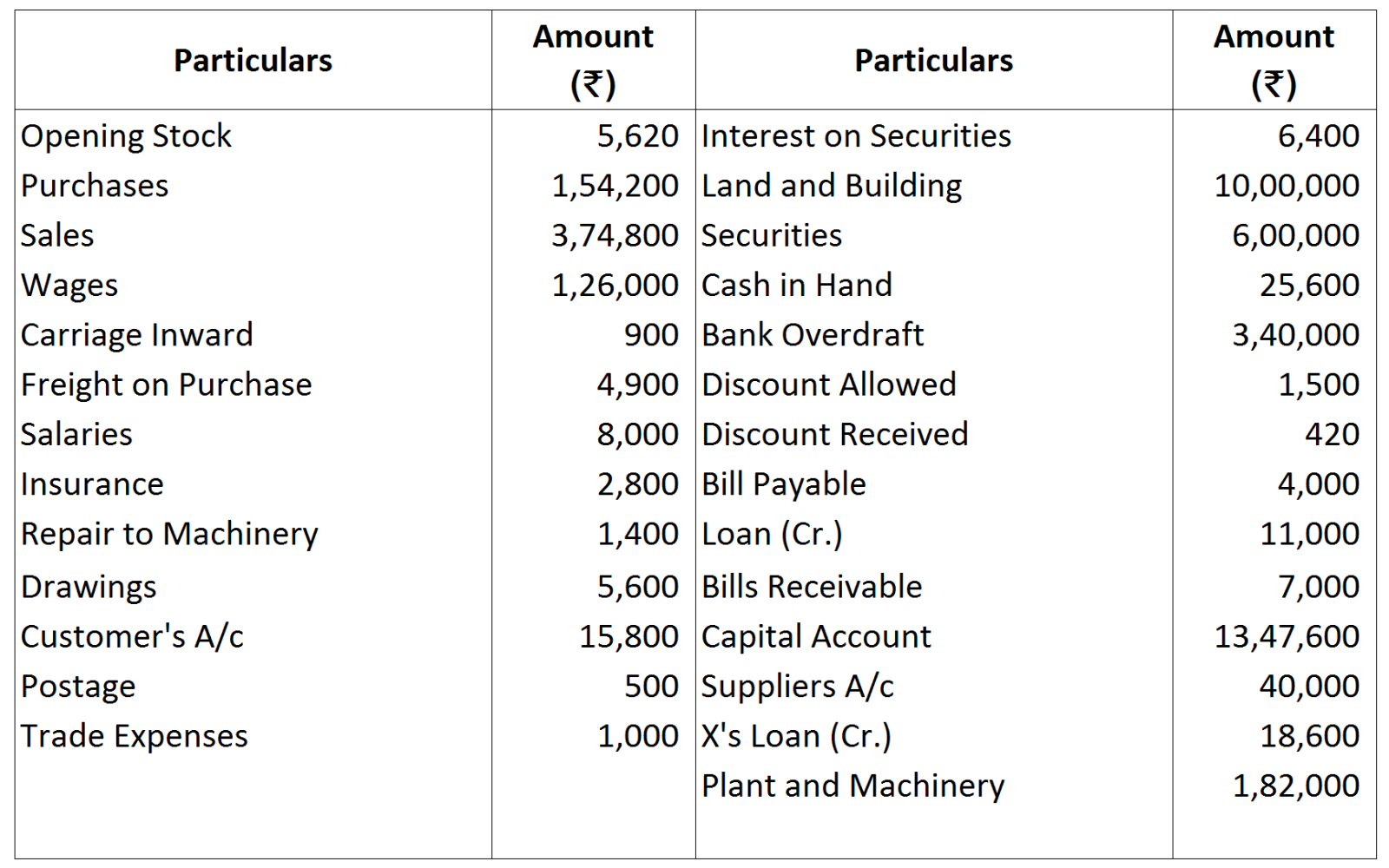
The following are the balances as on $31^{st}$​​​​​​​ March, $2019$ extracted from the books of Dass:

The stock on $31^{st}$​​​​​​​​​​​​​​ March, $2019$ was valued at $₹ 2,40,000$.
You are required to prepare Trading Account, Profit and Loss Account and Balance Sheet as at $31^{st}$​​​​​​​ March, $2019$.
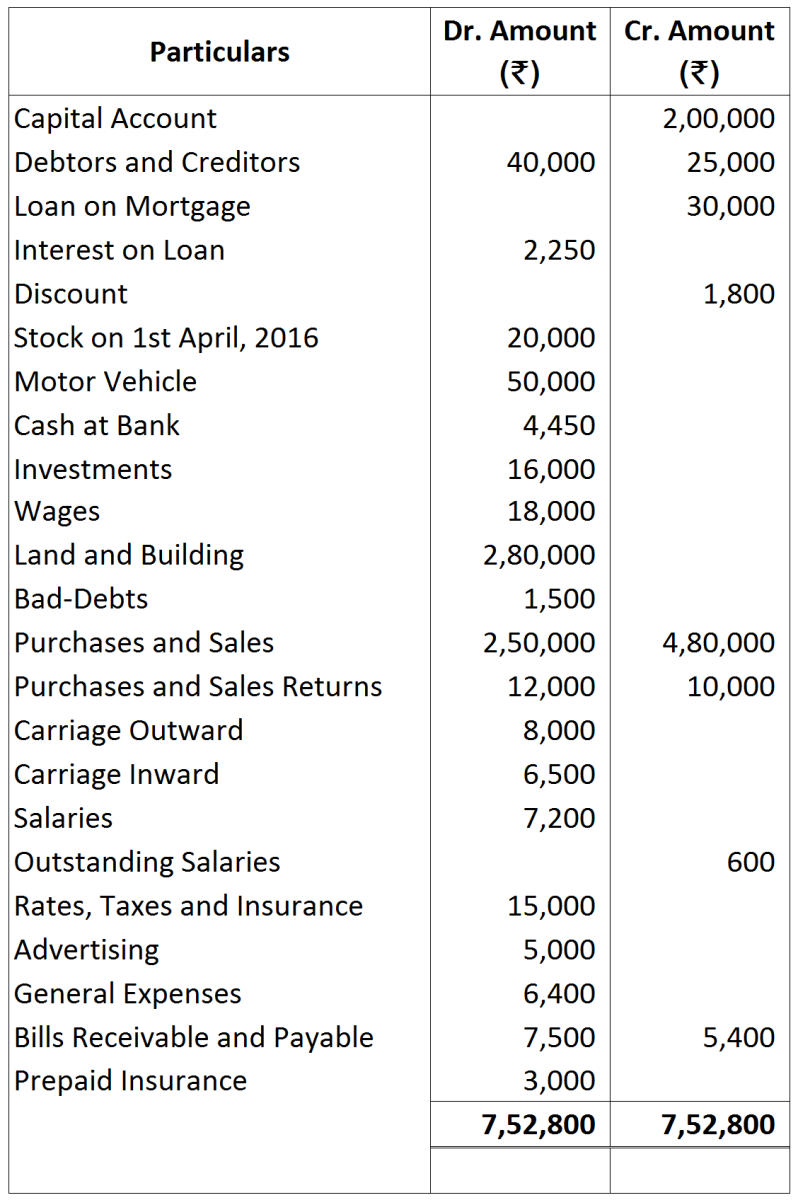
On 31st March, 2017 the following Trial Balance was extracted from the books of Sh. Ghanshyam Das:

Prepare Trading and Profit & Loss Account for the year ended 31st March, 2017 and Balance Sheet as at that date, after making adjustments for the following matters:
  1. Depreciate Land and Building at 2.5% and Motor Vehicles at 20%.
  2. Interest on Loan at 15% p.a. is unpaid for six months.
  3. Ghanshyam Das withdrew ₹ 2,000 for his private use. This amount was included in general expenses.
  4. Interest on Investments is receivable for full year @ 10%.
  5. Provide for Manager's Commission at 10% on Net Profit after charging such commission.
  6. Stock in hand on 31st March, 2017 was valued at ₹ 25,000 (Realisable value ₹ 22,000).
Prepare trading and profit and loss account and balance sheet from the following particulars as on March 31, 2017.

Closing stock ₹ 30,000.
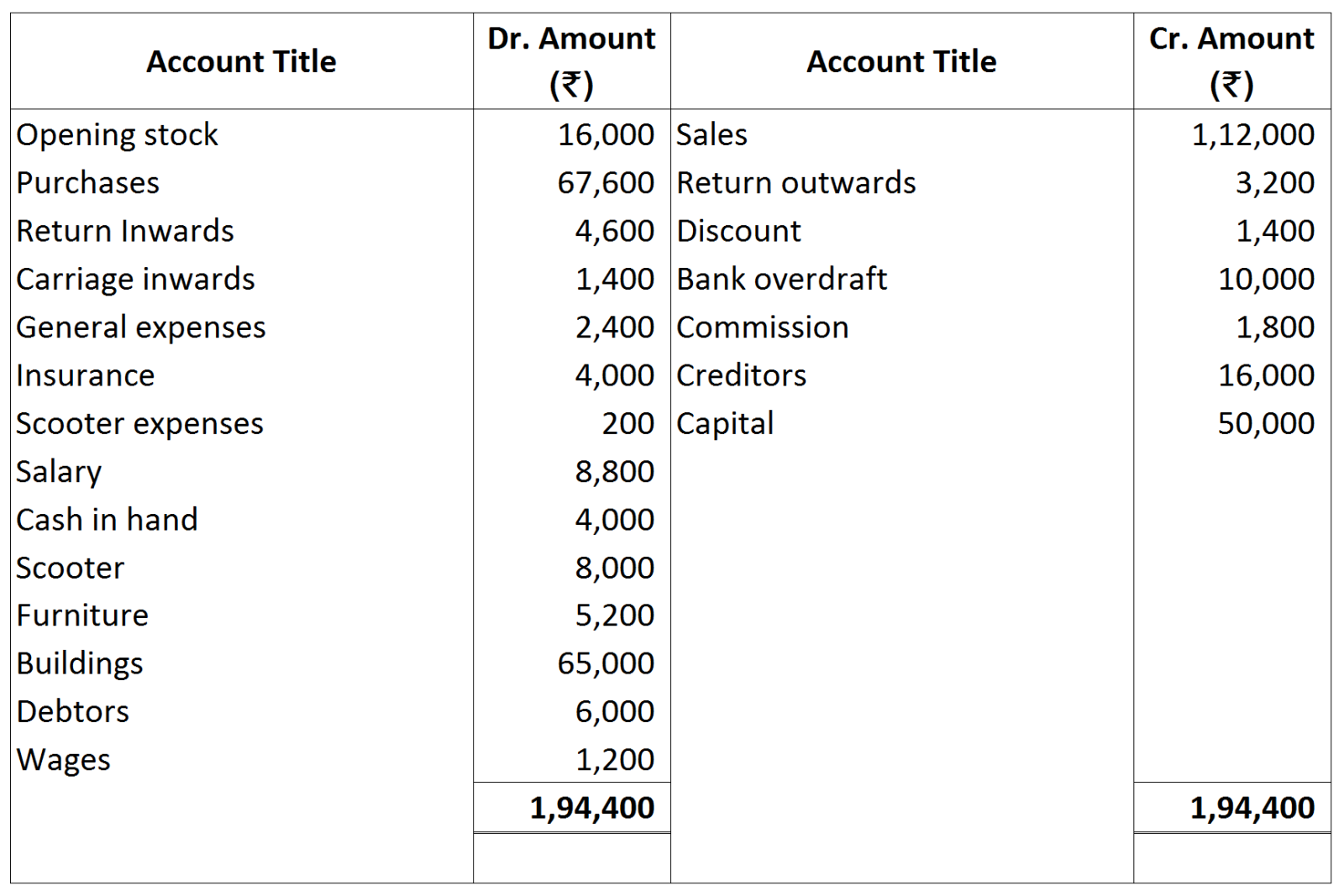
The following balances were extracted from the books of M/s Panchsheel Garments on March 31, 2017.

Prepare the trading and profit and loss account for the year ended March 31, 2017 and a balance sheet as on that date.
  1. Unexpired insurance ₹ 1,000.
  2. Saiary due but not paid Rs.₹ 1800.
  3. Wages outstanding ₹ 200.
  4. Interest on capital 5%.
  5. Scooter is depreciated @ 5%.
  6. Furniture is depreciated Rs.₹ @ 10%.
  7. Closing stock was Rs.₹ 15,000.
What is a participation role? State the circumstances under which the use of role names becomes necessary in description of relationship types.
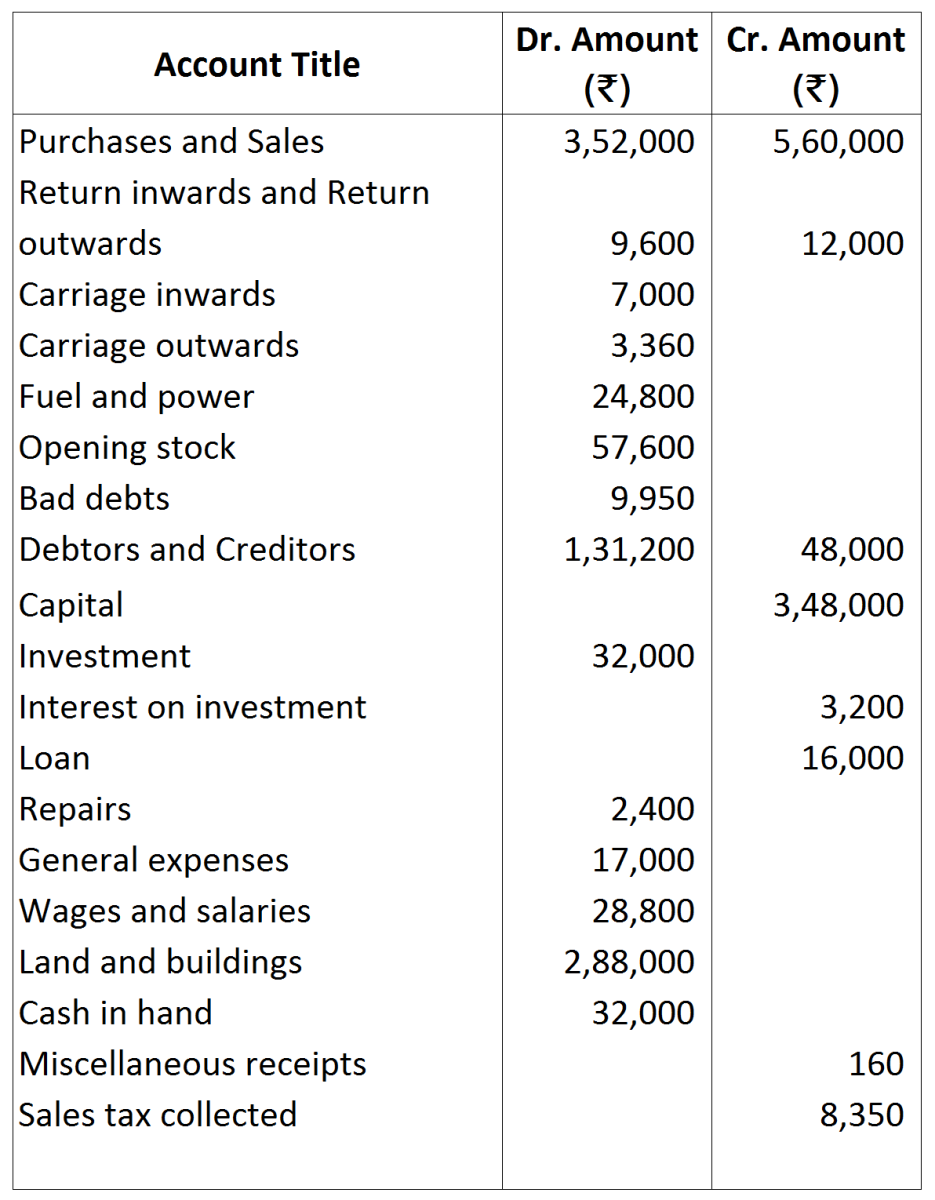
Following are balances from the trial balance of Ritesh Traders as at 31st March 2019:

Prepare Trading and Profit & Loss Account for the year ended 31st March 2019 and Balance Sheet as at that date after taking into account the following adjustments:
  1. Closing Stock was valued at ₹ 19,000.
  2. Depreciation to be provided on Land and Building @ 5% p.a. and on Plant & Machinery @ 10% p.a.
  3. Write off ₹ 2,000 as Bad debt.
  4. Insurance was prepaid ₹ 700.
  5. Create provision for doubtful debts @ 5% on debtors.
  6. Wages include ₹ 4,800 for installation of a new machinery.
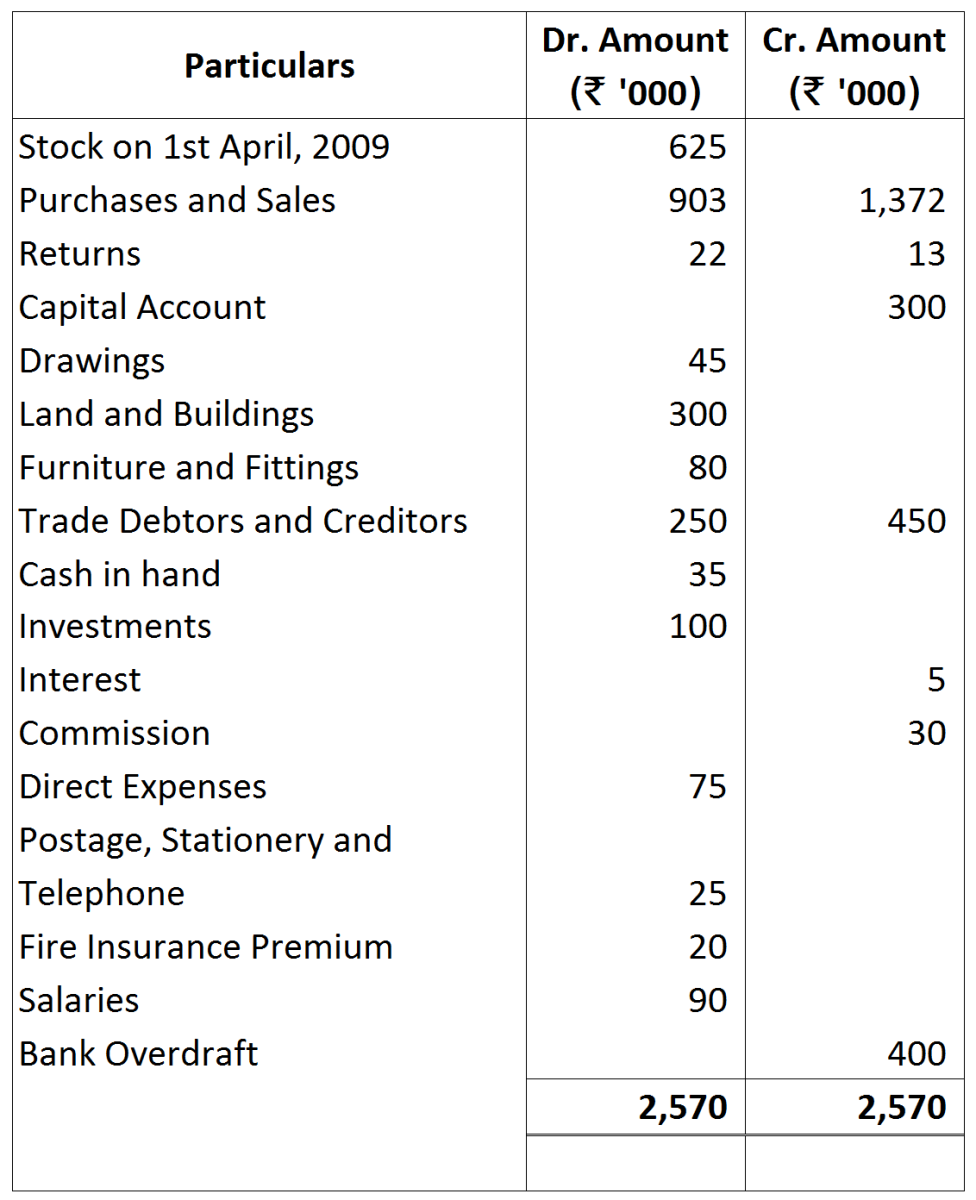
From the following balances extracted from the books of Karan and the additional information, prepare the trading and profit and loss account for the year ended 31st March, 2010 and also show the balance sheet as at that date:

Additional Information:
  1. Closing stock on 31st March, 2010 is valued at ₹ 6,50,000. Goods worth ₹ 5,000 are reported to have been taken away by the proprietor for his personal use at home during the year.
  2. Interest on investments ₹ 5,000 is yet to be received while ₹ 10,000 of the commission received is yet to be earned.
  3. ₹ 5,000 of the fire insurance premium paid is in respect of the quarter ending 30th June, 2010.
  4. Salaries ₹ 10,000 for March, 2010 and bank overdraft interest estimated at ₹ 20,000 are yet to be recorded as outstanding charges.
  5. Depreciation is to be provided on land and buildings @ 5% per annum and on furniture and fittings @ 10% per annum.
  6. Make a provision for doubtful debts @ 5% of trade debtors.
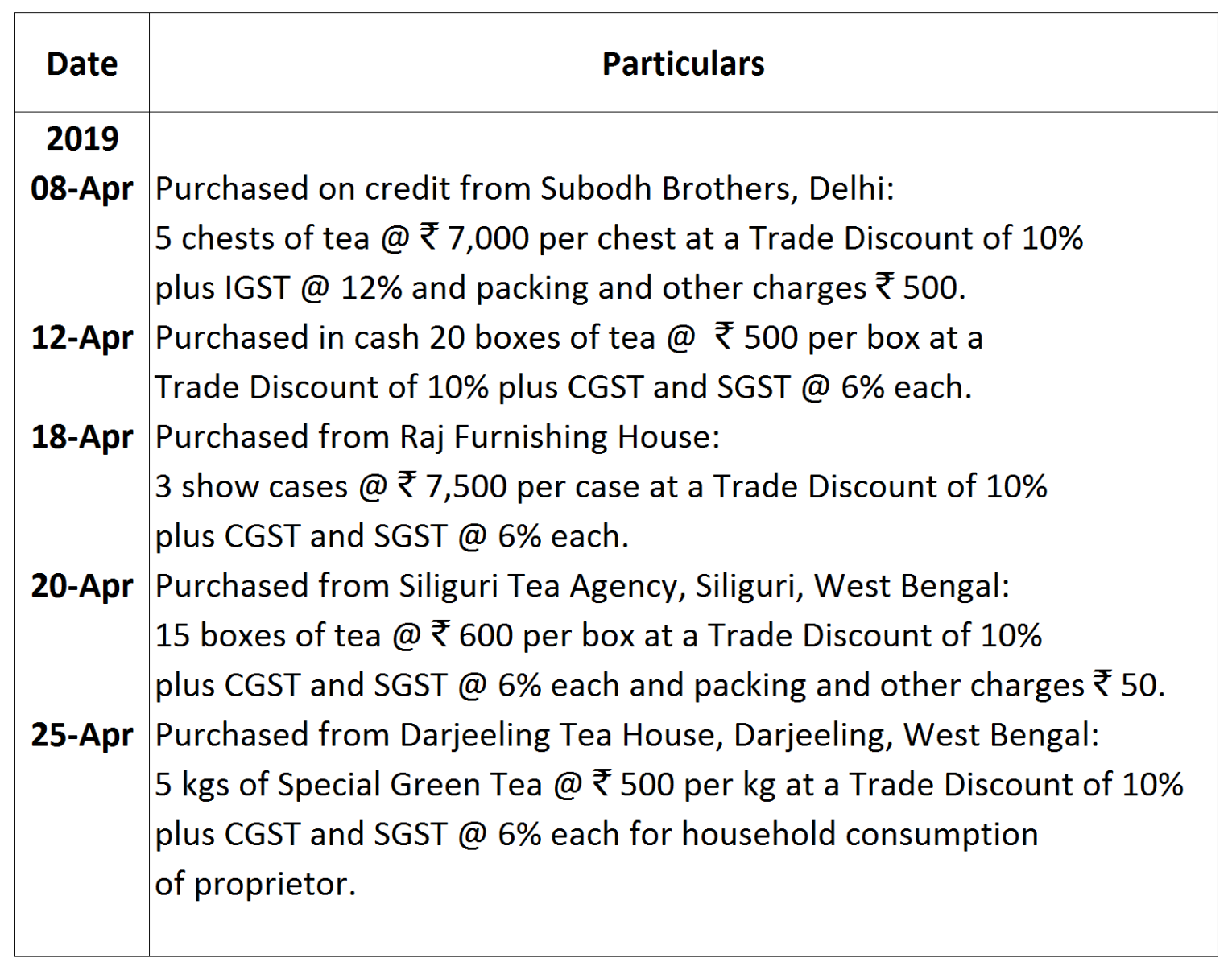
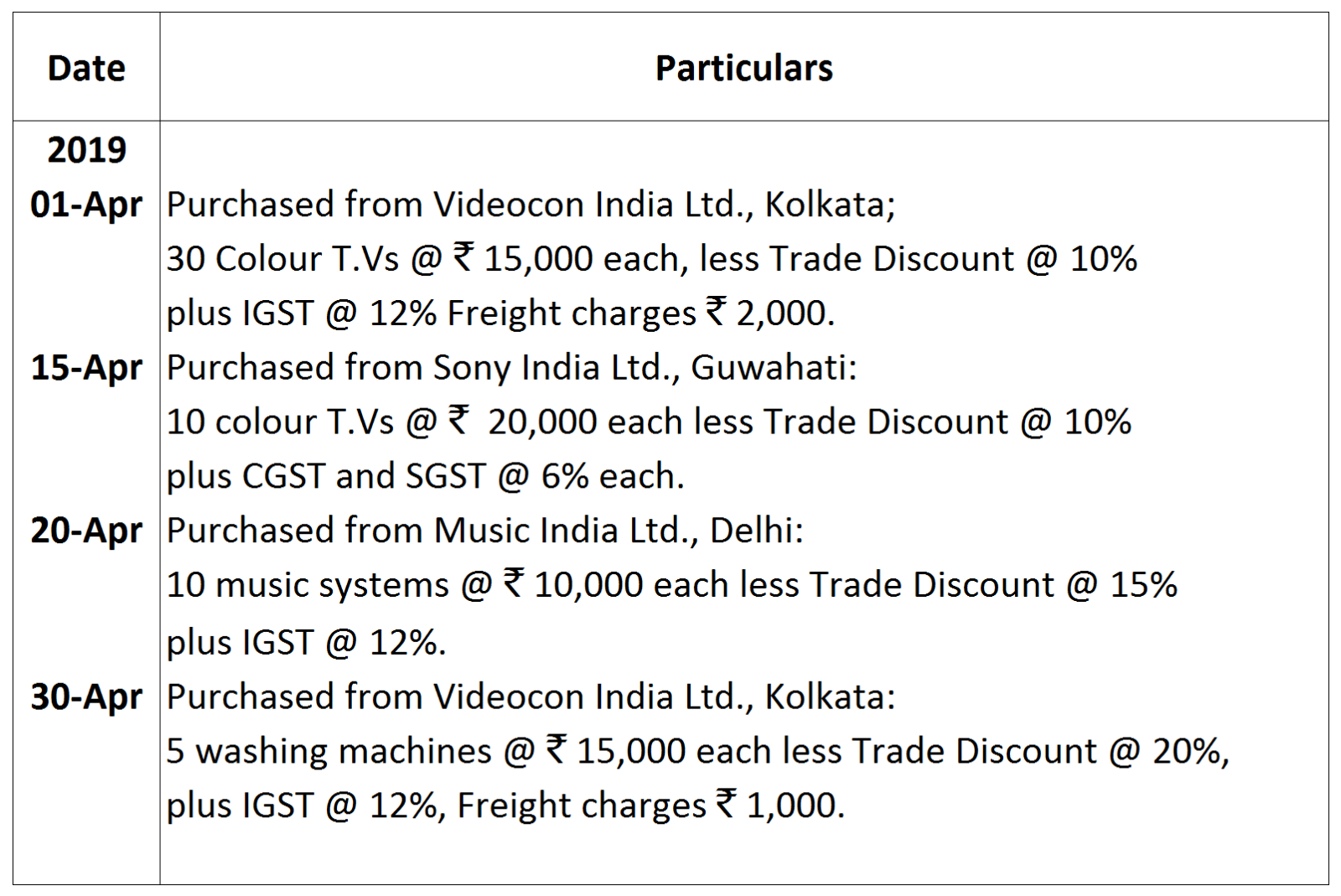
The following purchases were made by Karam, Kolkata, during the month of April, 2019. Prepare Purchases Book and post into Ledger Accounts: