Question
What does the term “double circulation” mean?

Answer

Blood flows twice in the heart before it completes one full round. The full round thus includes
pulmonary and systemic circulation. In pulmonary circulation, blood enters the lungs through
pulmonary arteries. Pulmonary veins collect the blood from the lungs and carry it back to the
left atrium.
In systemic circulation, blood from the left ventricle enters the aorta through which the blood is
sent to the body parts. From the body parts blood is collected by veins and sent back to the heart.
Therefore, the blood circulation in the human body is called double circulation.

Need a full question paper?

Generate a complete, print-ready paper with questions like this in minutes — across 16+ boards, with answer keys.

Start Generating Free

Similar questions

Give reason for the following:
The blood groups of both the donor and recipient must be known before transfusing blood.
Explain the Term: Glomerulus
Distinguish between the following :
Stomata and lenticels
Given below is a portion of the diagram to show the diagrammatic highly magnified view of a single human sperm. Complete the diagram to show its normal structure.
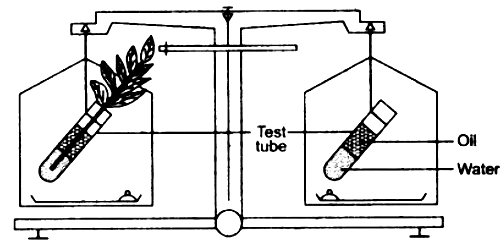
Study the diagram given alongside and answer the questions that follow:

(i) Explain the physiological process of being study.
(ii) What will be the observations in the two test-tubes after about 2-3 days?
(iii) Give a reason for your answer in (ii) above.
(iv) Why is the surface of water covered with oil?
(v) State the purpose of setting up test tube B.
Study the diagram given below and then answer the questions that follow:
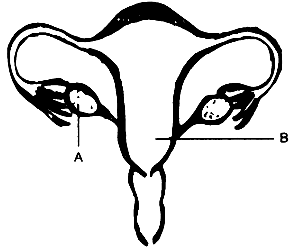
(i) Name the part labeled A. Name any two hormones produced by the part labeled A.
(ii) What happens to the part labeled B.
(1) if fertilization takes place?
(2) If fertilization does not take place?
(iii) Where does fertilization occur?
(iv) Draw a neat diagram of the human sperm as seen under high magnification and label the following parts.
(1) Acrosome
(2) Mitochondria

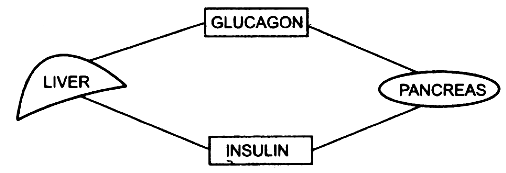
Study the diagram given below and then answer the question that follows

Why is the pancreas referred to as an exo-endocrine gland?
How can the knowledge of processes of reproduction help people in limiting the size of their families? Give two concrete examples
Give Reasons
Gametes have a haploid (n) number of chromosomes.
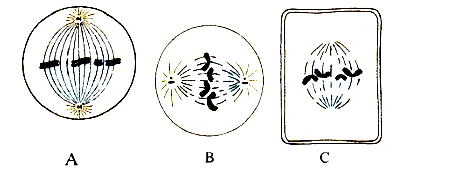
Given below are three diagrammatic sketches (A, B and C) of one and the same particular phase during mitotic type of cell division.

(a) Identify the phase
(b) What is the diploid number of chromosomes shown in them?
(c) Identify whether these are animal cells or plant cells?
(d) Which of these is/are shown in correct direction?
(i) Only A
(ii) Only B
(iii) Only A and C
(iv) All the three