Question
What is a bioreactor? Explain its functioning.

Answer

The main objective of almost all recombinant technologies is to produce the desired protein. For this, after cloning the desired gene and optimizing the conditions that induce the expression of the target protein, it is possible to produce them on a large scale. Cells harboring beneficial genes can be cultured in the laboratory on a small scale. The desired protein can be extracted from the culture and purified using various methods of separation. Cells can be multiplied in a continuous culture system, in which used medium is drained from one side and fresh medium is added from the other side so that the cells remain in their most functionally active log (exponential) phase. This culture method is useful for producing more biomass and producing more of the desired protein.
Bioreactors are used to produce these products in large quantities. Bioreactors are like vessels in which raw materials are converted into biologically specific products, individual enzymes etc. using microorganisms, plants, animals and human cells. The bioreactor provides optimum conditions to obtain the desired product. Temperature, pH, substrate, salts, vitamins, oxygen etc. are the optimum conditions for growth. Generally stirring type bioreactor is used the most.
Stirred tank bioreactors are cylindrical. Its curved base helps in mixing of the contents inside the bioreactor. The bioreactor has the availability of oxygen and a stirrer facility for mixing the mixture. Alternatively, air is sent into the bioreactor in the form of bubbles. The bioreactor is equipped with an agitator system, oxygen supply system, froth control system, pH control system, temperature control system and sampling ports from which a small amount of the culture can be taken out from time to time.
Need a full question paper?

Generate a complete, print-ready paper with questions like this in minutes — across 16+ boards, with answer keys.

Start Generating Free

Similar questions

Name the host plant and its part that Meloidegyne incognita infects. Explain the role of Agrobacterium in the production of dsRNA in the host plant.
Human blood group is a good example of multiple allelism and co-dominance. Justify.
Write the functions of: Coleoptile.
Name and explain the techniques used in the separation and isolation of DNA fragments to be used in recombinant DNA technology.
How has RNAi technique helped to prevent the infestation of roots in tobacco plants by a nematode Meloidegyne incognitia?
Explain the various steps involved in the production of artificial insulin.
What is cleavage?
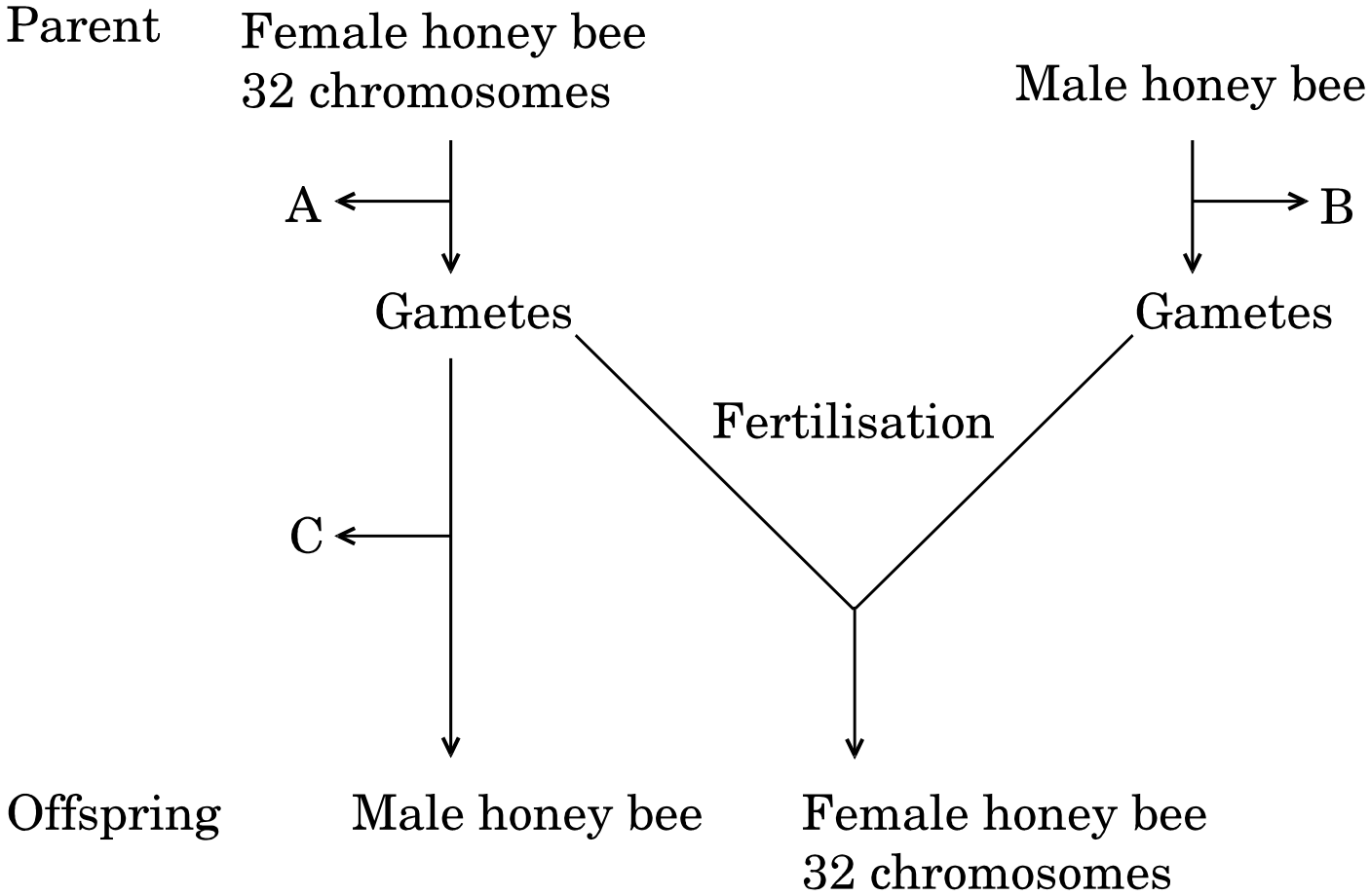
The cytological observations made in a number of insects led to the development of the concept of genetic/ chromosomal basis of sex-determination mechanism. Honey bee is an interesting example to study the mechanism of sex-determination. Study the schematic cross between the male and the female honey bees given below and answer the questions that follow:

  1. Identify the cell divisions ‘A’ and ‘B’ that lead to gamete formation in female and male honey bees respectively.
  2. Name the process ‘C’ that leads to the development of male honey bee (drone).
Given below are the events that are observed in an artificial hybridisation programme. Selection of parents → Emasculation → Bagging → Collection of pollen from other male plant → Dusting of pollen on stigma — Rebagging.
While, planning for crop improvement involving dioecious plants, which of the above mentioned steps would not be relevant?
  1. Why was a bacterium used in the first instance of the construction of an artificial recombinant DNA molecule?
  2. Name the scientists who accomplished this and how?