Question
What is an emission spectrum?

Answer

  • When a substance is irradiated with electromagnetic radiation, it absorbs energy. Atoms, molecules or ions, which have absorbed radiation are said to be ‘excited’. Heating can also result in an excited state.
  • The excited species emits the absorbed energy in the form of radiation. This process is called emission of radiation and the recorded spectrum of this emitted radiation is called ‘emission spectrum’.

Need a full question paper?

Generate a complete, print-ready paper with questions like this in minutes — across 16+ boards, with answer keys.
Start Generating Free

Similar questions

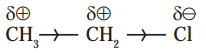
An electronic displacement in a covalent bond is represented by following notation.
Image
A. Identify the effect
B. Is the displacement of electrons in a covalent bond temporary or permanent.
Why are atoms held together in chemical compounds?
Turmeric powder can be used as antiseptic.
Sodium dissolves in liquid ammonia to form a solution which shows electrical conductivity.
For the reaction, $SeO _{3( aq )}^{2-}+ Cl _{2( g )}+2 OH _{( aq )}^{-} \longrightarrow SeO _{4( aq )}^{2-}+2 Cl _{( aq )}^{-}+ H _2 O _{( l )}$, complete the following table.
Oxidising agent_____________
Reducing agent_____________
Oxidised species_____________
Reduced species_____________
Identify the following nuclides as: isotopes, isobars and isotones. ${ }_1^3 H ,{ }_2^4 He ,{ }_6^{14} C ,{ }_{17}^{38} Cl ,{ }_7^{14} N ,{ }_{12}^{24} Mg ,{ }_{17}^{35} Cl ,{ }_{16}^{32} S ,{ }_{15}^{31} P$
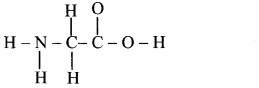
Below is an incomplete Lewis structure for glycine. Complete the following Lewis structure and answer the following questions. (Hint: Add lone pairs and multiple bonds to the structure below to give each atom a formal charge of zero.)
Image
i. How many lone pairs of electrons are present on N-atom in the structure?
ii. How many pi bonds are present in the structure?
iii. How many sigma bonds are present in the structure?
How are the equilibrium constants of the following pair of equilibrium reactions related?
i. $\quad CO _{2(g)}+ N _{2(g)} \stackrel{ K _C}{\rightleftharpoons} CO _{( g )}+ N _2 O _{( g )}$
ii. $\quad CO _{( g )}+ N _2 O _{( g )} \stackrel{ K _{ C }^{\prime}}{\rightleftharpoons} CO _{2( g )}+ N _{2( g )}$
Where is Dalton’s law applicable?
Define the terms oxidation and reduction in terms of oxidation number.