Question
What is an ionic bond? Give two suitable examples explain the difference between ionic and covalent bond.

Answer

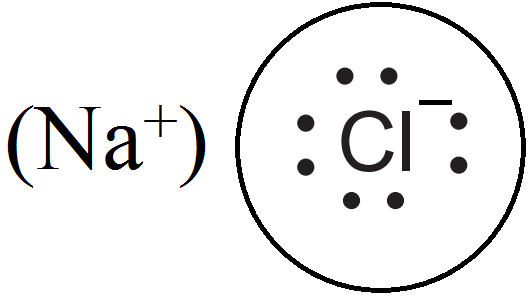
The bond which is formed by transfer of electron is called ionic bond.
S. No.
Ionic bond
Covalent bond
i.
It is formed by transfer of electrons.
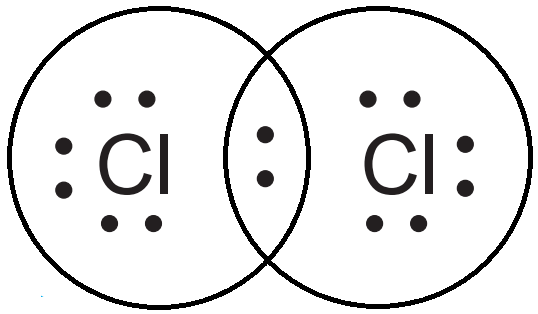
It is formed by sharing of electrons.
ii.
It is formed metal and non metals. e.g.
It can be formed between two non metals also. e.g.
Need a full question paper?

Generate a complete, print-ready paper with questions like this in minutes — across 16+ boards, with answer keys.

Start Generating Free

Similar questions

Ethyl acetate is formed by the reaction between ethanol and acetic acid and the equilibrium is represented as :
$CH _3 COOH ( l )+ C _2 H _5 OH ( l ) \rightleftharpoons CH _3 COOC _2 H _5( l )$$+ H _2 O ( l )$
(i) Write the concentration ratio (reaction quotient) $Q_c$, for this reaction (note : water is not in excess and is not a solvent in this reaction).
(ii) At 293 K , if one starts with 1.00 mol of acetic acid and 0.18 mol of ethanol, there is 0.171 mol of ethyl acetate in the final equilibrium mixture. Calculate the equilibrium constant.
(iii) Starting with 0.5 mol of ethanol and 1.0 mol of acetic acid and maintaining it at $293 K, 0.214 mol$ of ethyl acetate is found after sometime. Has equilibrium been reached?
Determine the molecular formula of an oxide of iron, in which the mass per cent of iron and oxygen are 69.9 and 30.1, respectively.
Note: Given that the molar mass of the oxide is 159.69g mol-1
Elements X, Y and Z have 4, 5 and 7 valence electrons respectively:
  1. Write the molecular formula of the compounds formed by these elements individually with hydrogen.
  2. Which of there compound will have the highest dipole moment?
Consider the reactions :
a. $6 CO _2(g)+6 H _2 O ( I ) \longrightarrow C _6 H _{12} O _6( aq )+6 O _2$ (g)
b. $O _3(g)+ H _2 O _2( I ) \longrightarrow H _2 O ( I )+2 O _2(g)$
Why it is more appropriate to write these reactions as :
a. $6 CO _2+12 H _2 O ( I ) \longrightarrow C _6 H _{12} O _6( aq )+6 H _2 O ( I )+6 O _2(g)$
b. $O _3(g)+ H _2 O _2( I ) \longrightarrow H _2 O ( I )+ O _2(g)+ O _2(g)$
Also suggest a technique to investigate the path of the above (a) and (b) redox reactions.
Write the resonance structures for $SO _3$, $NO _2$ and $NO _3^{-}$.
How would you explain the fact that the first ionization enthalpy of sodium is lower than that of magnesium but its second ionization enthalpy is higher than that of magnesium?
The increasing order of reactivity among group 1 elements is Li < Na < K < Rb <Cs, whereas that among group 17 elements is F > CI > Br > I. Explain.
Calculate the number of atoms in each of the following
1. 52 mole of Ar
2. 52 u of He
3. 52 g of He .
Would you expect the second electron gain enthalpy of O as positive, more negative or less negative than the first? Justify your answer.
$\text{Pent-1-yne}\xrightarrow[(\text{ii})\ \text{CH}_3-\text{I}]{(\text{i})\ \text{NaNH}_2/\text{NH}_3}\text{A}\xrightarrow[\text{Lindlar's catalyst}]{\text{H}_2}\text{B}\xrightarrow{\text{Br}_2}\text{‘C’}$

Identify A, B and C compounds and give their reactions.