Question
What is bagging technique? How is it useful in a plant breeding programme?

Answer

Various artificial hybridization techniques (under various crop improvement programmes) involve the removal of the anther from bisexual flowers without affecting the female reproductive part (pistil) through the process of emasculation. Then, these emasculated flowers are wrapped in bags to prevent pollination by unwanted pollen grains. This process is called bagging.
This technique is an important part of the plant breeding programme as it ensures that pollen grains of only desirable plants are used for fertilization of the stigma to develop the desired plant variety.

Need a full question paper?

Generate a complete, print-ready paper with questions like this in minutes — across 16+ boards, with answer keys.
Start Generating Free

Similar questions

  1. Draw a labelled sketch of a mature 7-celled, 8-nucleate embryo-sac.
  2. Which one of the cell in an embryo-sac produce endosperm after double fertilisation?
Name the term used for metamorphosis of spermatids?
Explain logistic growth with equation.
Taking ABO blood group as an example, explain the phenomenon of multiple allele and co-dominance.
Describe the technique by which genetic disorder in a developing foetus can be detected.
Define the terms and give one example for each: Parasitism

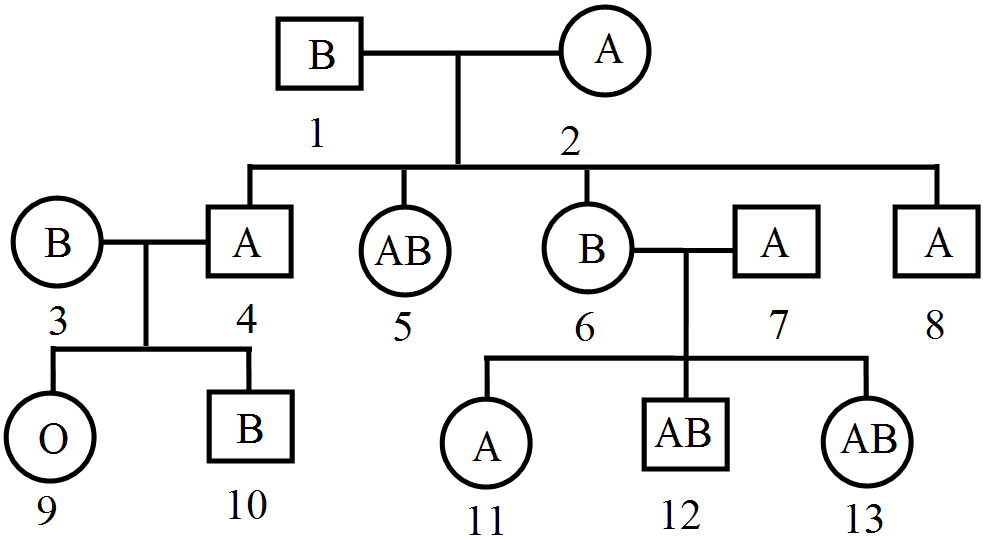
Study the pedigree chart given above, showing the inheritance pattern of blood groups in a family and answer the following questions:
  1. Give the possible genotypes of the individuals 1 and 2.
  2. Which antigen or antigens will be present on the plasma membranes of the RBCs of individuals 5 and 9?
  3. Give the genotypes of the individuals 3 and 4.
  1. Draw a diagram of pistil showing pollen tube growth in angiosperm and label;
  1. Stigma.
  2. Male gametes.
  3. Micropyle.
  4. Ovule.
  1. Write the function of micropyle.
AtRNA is charged with the amino acid methionine.
  1. Name the process involved in attachment.
  2. Point out the mRNA codon and anticodon on tRNA for this amino acid.
  3. Name the enzyme responsible for this attachment.
Since the origin of life on the earth, there were five episodes of mass extinction of species.
  1. How is the 'Sixth Extinction', presently in progress, different from the previous episodes?
  2. Who is mainly responsible for the 'Sixth Extinction'?
  3. List any four points that can help to overcome this disaster.