Question
What is ecological pyramid? Describe the different types of pyramid.

Answer

The relation between producers and consumers in an ecosystem can be graphically represented in the form of a pyramid called ecological pyramid.

  • Structure: The base always represents the producers or the first trophic level and the apex represents top level consumer or the last trophic level.

  • Ecological pyramids are of three types:

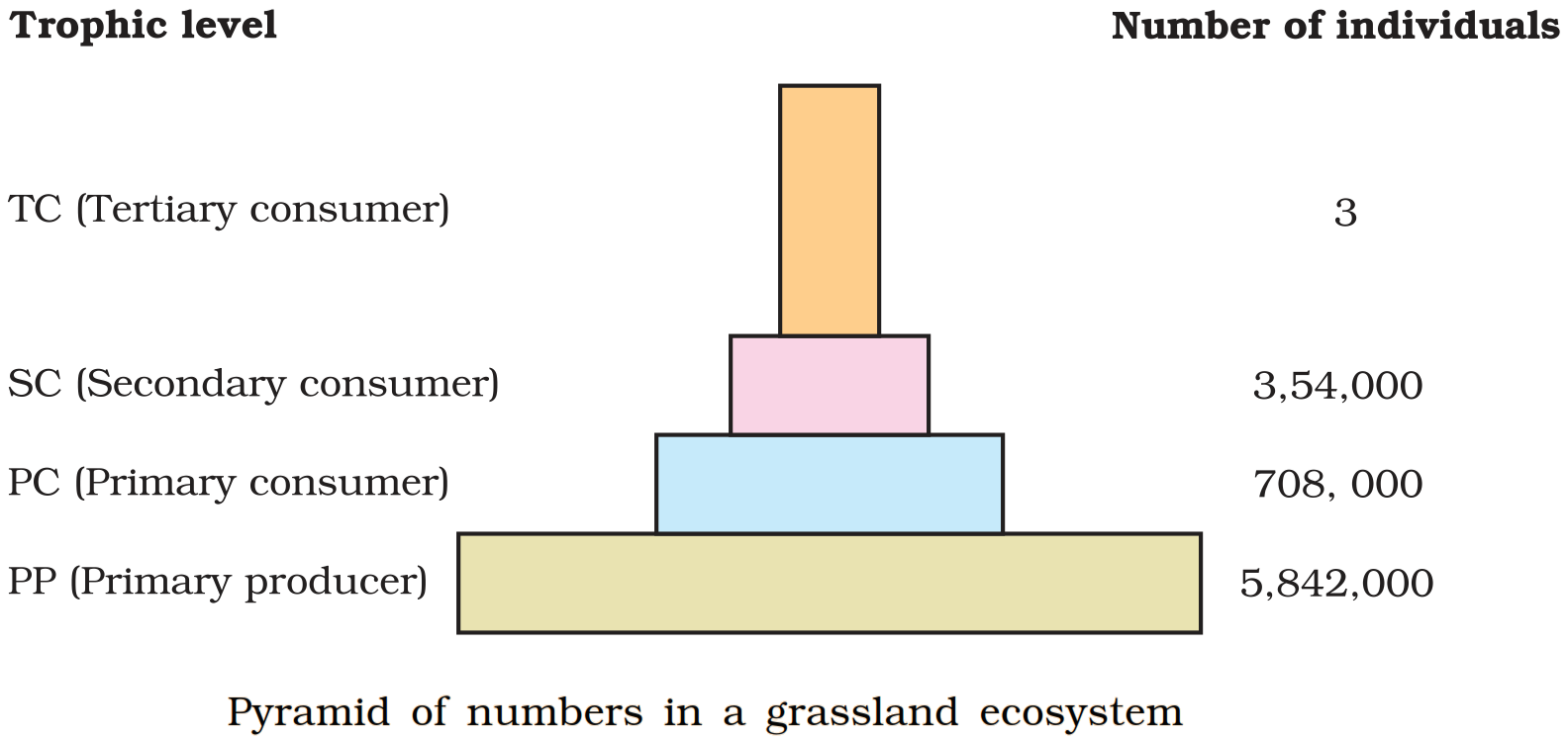
  1. Pyramid of number: The relationship between producers and consumers in an ecosystem can be represented in the form of a pyramid in terms of number called pyramid of number.

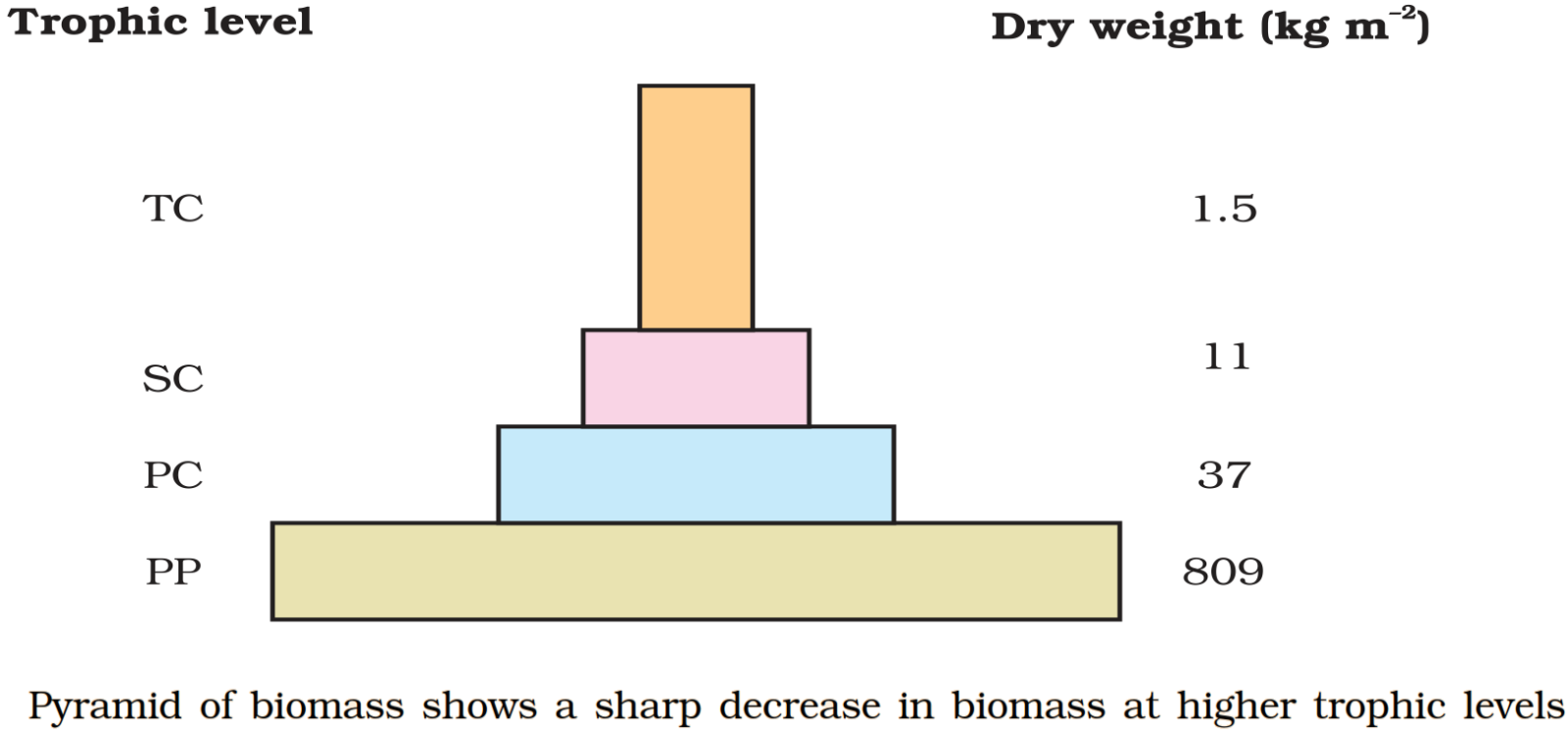
  1. Pyramid of biomass: The relationship between producers and consumers in an ecosystem can be represented in the form of a pyramid in terms of biomass called pyramid of biomass.

It can be:

  1. Upright, e.g., in case of grassland ecosystem;
  2. Inverted, e.g., in case of pond ecosystem.

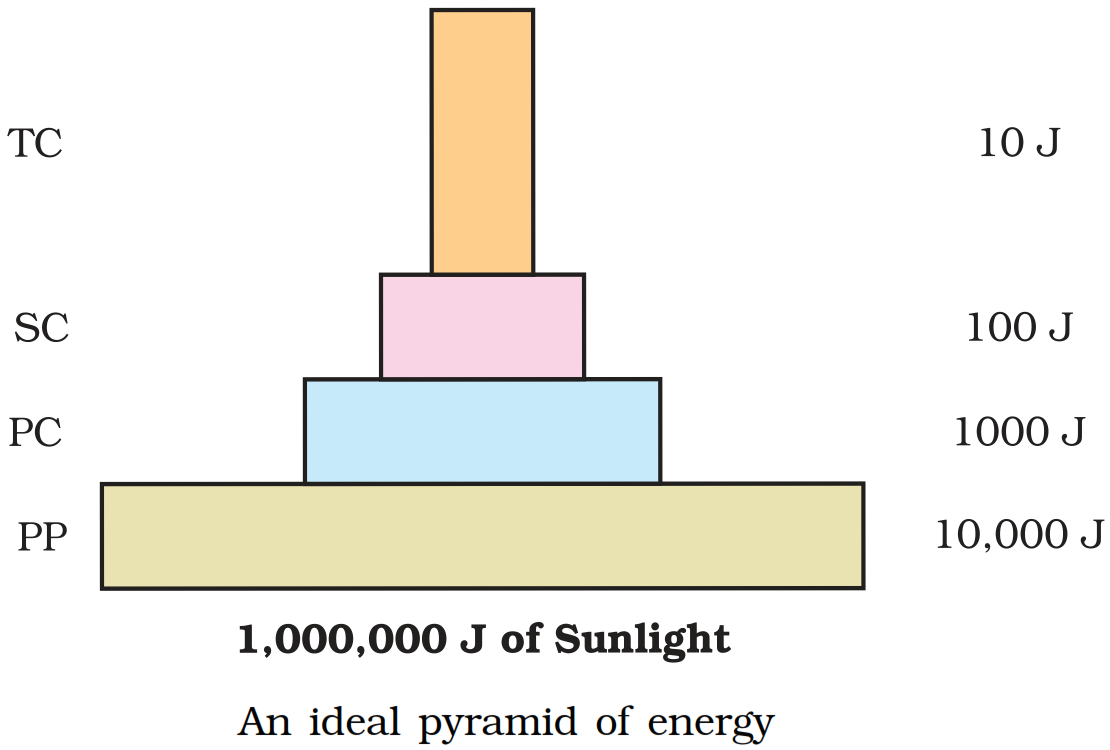
  1. Pyramid of energy: The relationship between producers and consumers in an ecosystem can be represented in the form of a pyramid, in terms of flow of energy called pyramid of energy. It is always upright because energy is always lost as heat at each step.

Need a full question paper?

Generate a complete, print-ready paper with questions like this in minutes — across 16+ boards, with answer keys.
Start Generating Free

Similar questions

What is a test cross? How can it decipher the heterozygosity of a plant?###Explain Mendel's Test cross only by figure.###What is a test cross? Show phenotypic ratio 1 : 1 in a monohybrid test cross through punnet square.###During a monohybrid corss involving a tall pea plant with a dwarf pea plant the offspring populations were tall and dwarf in equal ratio work out a cross to show how it possible.
  1. Trace the succession of plants on a dry bare rock.
  2. How does phosphorus cycle differ from carbon cycle?
With a neat, labelled diagram, describe the parts of a mature angiosperm embryo sac. Mention the role of synergids.
  1. Why are herbivores considered similar to predators in the ecological context? Explain.
  2. Differentiate between the following interspecific interactions in a population:
  1. Mutualism and Competition.
  2. Commensalism and Amensalism.
Discuss use of various contraceptive measures used for population control.
A group of students visited a botanical garden, where they saw fungus growing on roots of higher plants only. They were confused seeing it. Then, their teacher told them that it is an interspecific interaction in which both species can be benefitted.
  1. Write the name of this particular association.
  2. How both are benefitted from each other?
  3. State use of this interaction to a farmer.
  4. What values are shown by students?
Answer the following questions:
Draw a schematic diagram of a human sperm and label the cellular components. Give the functions of any three parts.
Answer the following questions:
Write the specific location and the functions of the following cells in human males:
  1. Leydig cells.
  2. Sertoli cells.
  3. Primary spermatocyte.
Represent schematically the life cycle of a malarial parasite.
What is somatic hybridisation? Explain different steps involved in the process. Give two importance of somatic hybridisation.