Question
What is global warming? Give its effects.

Answer

Global warming: An increase in the carbon dioxide content in the atmosphere leads to global warming. The global warming is quite dangerous as it tends to melt polar ice and glaciers existing on mountains, rise in the water level of the oceans and submerge several coastal areas and islands. This could further lead to floods.

Need a full question paper?

Generate a complete, print-ready paper with questions like this in minutes — across 16+ boards, with answer keys.
Start Generating Free

Similar questions

Doctor diagnosed that Radha was suffering from $HIV-AIDS$. List any two methods by which she might have contracted the disease. Name the organ affected by this disease.
What is phenomenon through which certain pollutants get accumulated in tissues in increasing concentration along the food chain, called?
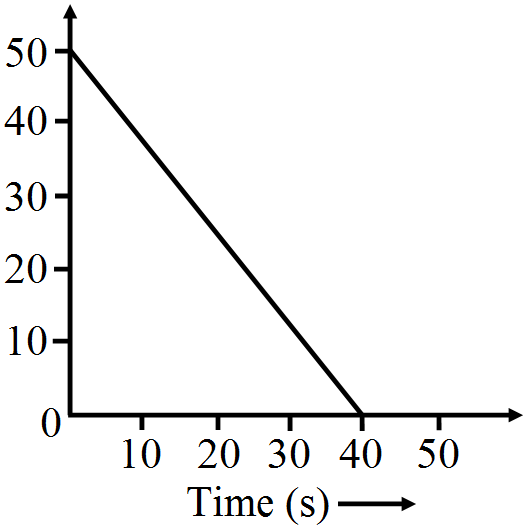
What is the value of acceleration in the following graph:


Name one:
  1. Inexhaustible resource.
  2. Renewable exhaustible resource.
  3. Nonrenewable exhaustible resource.
A man drops a $10kg$ rock from the top of a $5m$ ladder. What is its speed just before it hits the ground? What is its kinetic energy when it reaches the ground? $(8 = 10m/s^2)$
Show by means of calculations that $5$ moles of $\mathrm{CO}_2$ and $5$ moles of $\mathrm{H}_2 \mathrm{O}$ do not have the same mass. How much is the difference in their masses?
Shyam and his friends were playing with a catapult (gulel) in his garden. Several mangoes were dislodged and fell with the help of catapult. One of his friend was aiming the catapult on a bird. Shyam prevented him from doing so.
a. Name the energy possessed by the stretched string of the catapult.
b. What will happen if the stone is thrown without stretching the string of a catapult?
c. Why did Shyam prevent his friend from aiming at the bird? Which quality is highlighted in Shyam's behaviour?
Name the components of cattle feed.
Give one point of difference between notochord and nerve cord.
Calculate the molecular masses of the following:
  1. Hydrogen, $H_2$
  2. Oxygen, $O_2$
  3. Chlorine, $Cl_2$
  4. Ammonia, $NH_3$
  5. Carbon dioxide, $CO_2$
(Atomic masses:$ H = 1 u; O = 16 u; Cl = 35.5 u; N = 14 u; C = 12 u)$