Question
What is inhibition? Explain competitive inhibition with example.

Answer

Inhibition: The activity of any enzyme is sensitive in the presence of specific chemicals which bind to the enzyme. When after binding of a chemical with an enzyme, its activity stops, then this process is called inhibition and that chemical is called inhibitory.
Competitive Inhibition: When the inhibitor is very similar to the substrate in its molecular structure and inhibits the activity of the enzyme, then it is called competitive inhibition.
Due to the close structural similarity of the inhibitor to the substrate, it competes with the substrate by binding to the substrate binding site of the enzyme. As a result, the substrate is unable to bind to the substrate binding site, resulting in slowing down of enzyme activity. For example, the inhibition of succinic dehydrogenase by malonate, which is closely similar in structure to the substrate succinate. Such competitive inhibitors are often used to control bacterial pathogens.
Need a full question paper?

Generate a complete, print-ready paper with questions like this in minutes — across 16+ boards, with answer keys.

Start Generating Free

Similar questions

A particular plant tissue is responsible for a particular task. It is similar to which of the following? How does specialization help in making our work easy?
  1. A particular teacher is responsible for teaching a particular subject in school.
  2. A particular student is good at a certain subject only.
  3. Some students are good at many subjects.
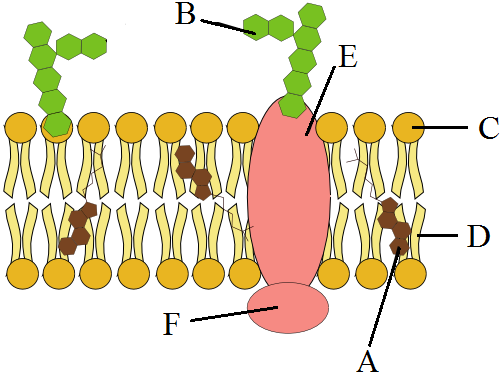
The diagram shows a section of cell membrane. Identify the components labelled A-F.
  1. Define vernalisation.
  2. What are short-day plants?
  3. Name the plant growth regulator, which is snythesised by ripening fruits.
What is the symmetry of a flower?
On a trip of North-East region, Kirti saw some plants which have big leaves in order to trap organisms. Kirti was amazed and asked her teacher about the reason for absence of such plants in other areas. Teacher replied that such plants grow on soil that is deficient in nitrogen and therefore, catch insects to fulfil their nitrogen requirements.
  1. What is the role of nitrogen in plants?
  2. Name any two insectivorous plants?
  3. What is the nature of such plants? What is the strange thing about them?
  4. Which values of Kirti one should imbibe?
Who was the first to attempt a more scientific basis for classification of living organisms? How did he classify plants and animals?
Explain the importance of photosynthesis
Why does atrial systole always precede ventricular systole?
What is the natural source of auxin? Write any four differences between auxin and gibberellin.
  1. Name the cranial meninges that cover the brain.
  2. Write down one function of cerebellum and cerebrum each.