Question
What is the atomic mass (u) of calcium?

Answer

  1. 40
Explanation:
 Atomic mass (u) of Calcium is 40 u.

Need a full question paper?

Generate a complete, print-ready paper with questions like this in minutes — across 16+ boards, with answer keys.
Start Generating Free

Similar questions

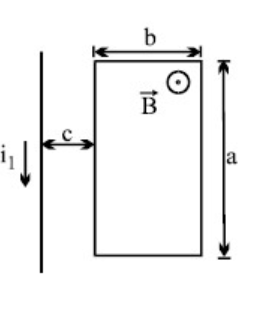
A long straight wire is placed along the axis of a circular ring of radius R. The mutual inductance of this system is.
Image
The magnitude of the vector product of two vectors $\big|\overrightarrow{\text{A}}\big|$ and $\big|\overrightarrow{\text{B}}\big|$ may be:
  1. Greater than AB.
  2. Equal to AB.
  3. Less than AB.
  4. Equal to zero.
If the sizes of charged bodies are very small compared to the distances between them, we treat them as ____________?
What is the respective number of $\alpha $ and $\beta$  particles emitted in the following radioactive decay $90^{X^{200}} \rightarrow 80^{Y^{168}}$
​​​​50% of the X-rays coming from a Coolidge tube are able to pass through a 0.1mm thick aluminium foil. If the potential difference between the target and the filament is increased, the fraction of the X-rays passing through the same foil will be:
  1. 0%
  2. < 50%
  3. 50%
  4. > 50%
For television broadcasting, the frequency employed is normally(a) 30-300 MHz(b) 30-300 GHz(c) 30-300 KHz(d) 30-300 Hz
       
$A$ particle of charge $q$ and mass $m$ is moving along the $x -$axis with a velocity $v$ and enters a region of electric field $E$ and magnetic field $B$ as shown in figure below for which figure the net force on the charge may be zero
The potential gradient at which the dielectric of a condenser just gets punctured is called(a) Dielectric constant(b) Dielectric strength(c) Dielectric resistance(d) Dielectric number
       
A convex lens A of focal length 20 cm and a concave lens B of focal length 5 cm  are kept along the same axis with the distance d between them. If a parallel beam of light falling on  A leaves B as a parallel beam, then distance d in cm will be(a) 25(b) 15(c) 30       (d) 50
       
Einstein got Nobel prize on which of the following works(a) Mass-energy relation(b) Special theory of relativity(c) Photoelectric equation(d)  (a) and (b) both