Question
What is the contribution of India in space technology?

Answer

The notable contribution of India in space technology is as follows:
i. Aryabhatta: India's first satellite, Aryabhatta, was launched by the Soviet Union in 1975. This marked India's entry into the field of space technology.
ii. SLV Satellite Series: ISRO developed its own Satellite Launch Vehicle (SLV) and successfully launched various satellites using launch vehicles.
iii. INSAT Series: The Indian National Satellite System (INSAT) is a series of multipurpose geostationary satellites that have provided communication, broadcasting, and meteorological services to India.
iv. IRS (Indian Remote Sensing) Satellites: India has launched a series of IRS satellites for earth observation, helping in agriculture, forestry, land use, and disaster management.
v. IRNSS (Indian Regional Navigation Satellite System): It is an independent regional navigation satellite system developed by the Indian Space Research Organisation (ISRO) to provide accurate position information services to users in India and the surrounding region.
vi. GSAT Series: ISRO has launched numerous GSAT (Geo-Stationary Satellite) communication satellites to enhance telecommunications and internet connectivity across India.
vii. Chandrayaan-1: In 2008, India's first lunar mission, Chandrayaan-1, discovered water molecules on the moon's surface and contributed to our understanding of the moon's geology.
viii. Mangalyaan (Mars Orbiter Mission): In 2013, India became the fourth country in the world to reach Mars orbit. The Mars Orbiter Mission, also known as Mangalyaan, was a significant achievement in obtaining information about surface and atmosphere of Mars.
ix. Astrosat: Launched in 2015, Astrosat is India's first dedicated multi-wavelength space observatory, contributing to the study of celestial sources.
Need a full question paper?

Generate a complete, print-ready paper with questions like this in minutes — across 16+ boards, with answer keys.

Start Generating Free

Similar questions

A potential difference of 100 V is applied across a resistor of resistance 50 Ω for 6 minutes and 58 seconds. Find the heat produced in (i) joule (ii) calorie.
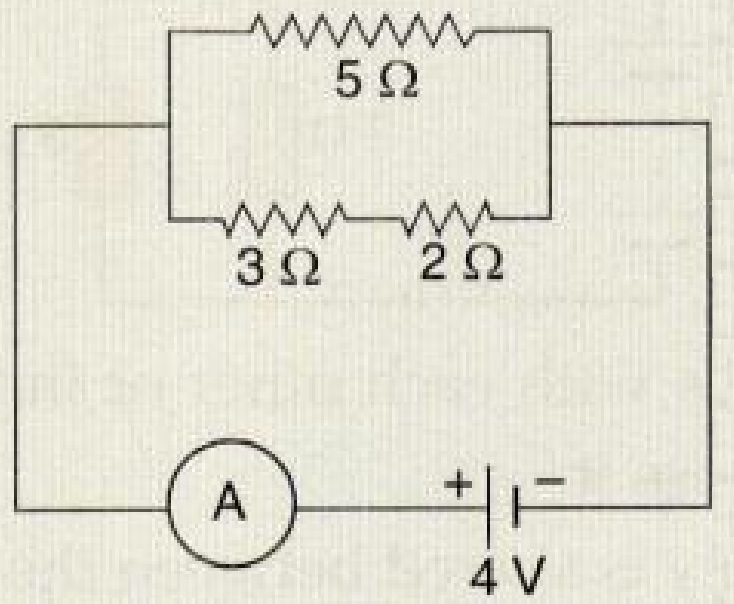
With the help of a circuit diagram, obtain the relation for the equivalent resistance of two resistances connected in parallel. In the circuit diagram shown below, find:
  1. Total resistance.
  2. Current shown by the ammeter $A$
Why is biogas considered an ideal fuel for domestic use?
Study the following principle and answer the questions. (Practice Activity Sheet – 4)
A force is excreted on a current-carrying conductor placed in a magnetic field. The direction of this force depends on both the direction of the current and the direction of the magnetic field. This force is maximum when the direction of the current is perpendicular to the direction of the magnetic field.
(a) By which law can we determine the direction of the force excreted on the current-carrying conductor?
(b) In which electrical equipment is this principle used?
(c) Draw a diagram representing the construction of this equipment.
(d) Write the working of this equipment in brief.
Rearrange the columns 2 and 3 so as to match with the column 1.
Column 1Column 2Column 3
i. Triada. Lightest and negatively charged particle in all the atoms1. Mendeleev
ii. Octaveb. Concentrated mass and positive charge2. Thomson
iii. Atomic numberc. Average of the first and the third atomic mass3. Newlands
iv. Periodd. Properties of the eighth element similar to the first4. Rutherford
v. Nucleuse. Positive charge on the nucleus5. Dobereiner
vi. Electronf. Sequential change in molecular formulae6. Moseley
Molecular formula of chlorine is $Cl_2.$ Draw an electron dot and line structure of a chlorine molecule.
How do we percieve different colours?
Explain the similarity and difference in two events, namely adding NaOH to water and adding CaO to water.
Explain with suitable examples importance of anatomical evidences in evolution.
###
Explain the importance of Anatomical evidences with examples.
Write the IUPAC names of the following structural formulae:

Image