Question
What is the difference between parenchyma and collenchyma?

Answer

 
Parenchyma
 
Collenchyma
$1.$
The tissue consists of thin-walled living cells.
$1.$
The tissue consists of cells having localised thickening in their cell walls.
$2.$
It is distributed in almost all the parts of the plant body.
$2.$
It occurs mostly in the aerial parts of the plants and is restricted to the other layers.
$3.$
The living cells of parenchyma assimilate and store food. They also store waste products.
$3.$
Collenchyma is the chief mechanical tissue in parts of a young plant particularly in the young dicotyledonous stems.

Need a full question paper?

Generate a complete, print-ready paper with questions like this in minutes — across 16+ boards, with answer keys.
Start Generating Free

Similar questions

Will ${ }^{35} Cl$ and ${ }^{37} Cl$ have different valencies? Justify your answer.
Represent graphically by two separate diagrams in each case
i. Two sound waves having the same amplitude but different frequencies?
ii. Two sound waves having the same frequency but different amplitudes
iii. Two sound waves having different amplitudes and also different wavelengths.
State Archimedes' principle. List its two applications.
What would happen when eukaryotic cells are placed in hypotonic, hypertonic and isotonic solutions?
What do you rnean by hygroscopic water and combined water in the soil? Are these available to plants?
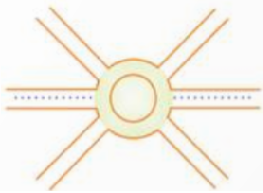
A boy is moving on a straight road against a frictional force of 5 N . After travelling a distance of 1.5 km he forgot the correct path at a round about (Fig.) of radius 100 m . However, he moves on the circular path for one and half cycle and then he moves forward upto 2.0 km . Calculate the work done by him.
Image
How is nitrogen replenished in atmosphere?
i. Explain, why is it difficult to walk on sand?
ii. Why is the recoil of a heavy gun, on firing, not so strong as that of a light gun using the same cartridge?
Classify the following organisms based on the absence/ presence of true coelom (i.e., acoelomate, pseudocoelomate and coelomate):
Spongilla
Sea anemone
Planaria
Liver fluke
Wuchereria
Ascaris
Nereis
Earthworm
Scorpion
Birds
Fishes Horse
Bromine and air take about $15$ minutes to diffuse completely but bromine diffuses into a vacuum very rapidly. Why is this so?