Question
What is the difference between static and dynamic equilibrium?

Answer

Equilibrium in any case requires the ? forces acting on an object = 0, i.e. that there is
Fnet = 0.
Static equilibrium is the situation where the object upon which the forces act is no moving.
The object is "static" hence the state of equilibrium gets its name.
Dynamic equilibrium is the situation where an object is in constant velocity motion.
{This object can't experience an acceleration which means Fnet >0}

Need a full question paper?

Generate a complete, print-ready paper with questions like this in minutes — across 16+ boards, with answer keys.

Start Generating Free

Similar questions

Name two isotopes of uranium.

Which of the isotope mentioned in part (a) above is easily fissionable? Give reason.

State whether the neutron needed for fission reaction of the isotope mentioned in part (b) above, is slow or fast?
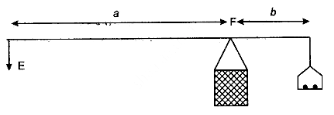
(i) Calculate the mechanical advantage of the lever shown in the figure.
(ii) How do you define the mechanical advantage of a machine?
Image
Give the role of each of the three terminals of a three way pin plug.
State three safety precautions that you would take while handling the radioactive substances.
Find the time taken by a $500 W$ heater to raise the temperature of $50 kg$ of material of specific
heat capacity $960 J kg ^{-1} K ^{-1}$, from $18^{\circ} C$ to $38^{\circ} C$. assume that all the heat energy supplied by the heater is given to the material.
You are required to connect a bulb, a fan and a socket outlet to the mains in one set A and an air-conditioner and a refrigerator to the mains in other set B. Will you recommend the wire of same thickness and same insulation in both? explain your answer.
An electrical appliance is rated at $1000 KVA, 220V$. If the appliance is operated for $2$ hours, calculate the energy consumed by the appliance in: $(i)$ kWh $(ii)$ joule.
A lens forms the image of an object placed at a distance of 45 cm from it on a screen placed at a distance 90 cm on other side of it. find:
  1. the focal length of lens,
  2. the magnification of image.
An electric current is passed through a metallic wire. The wire gets heated up. Give the reason. Is it possible to melt the wire by passing a heavy current?
Explain why does a wine glass starts rattling, when a note of some particular frequency is struck by a piano?