Question
  1. What is the functional difference between B-cells and T cells
  2. Name the source used to produce hepatitis B vaccine using rDNA technology.

Answer

  1.  
B-cells
T-cells
They produce antibodies, that form part of humoral immunity.
They stimulate B-cells to produce antibodies and they constitute the cell-mediated immunity.
They are not involved in rejecting organ transplants.
They are responsible for rejecting organ transplants.
  1. Yeast cells.

Need a full question paper?

Generate a complete, print-ready paper with questions like this in minutes — across 16+ boards, with answer keys.

Start Generating Free

Similar questions

Why are adolescents especially advised not to smoke? How does smoking affect the functioning of the body?
List any two types of IUDs that are available for human females and state their mode of action.
What is Incomplete dominance. Explain the inheritance of colour in snapdragon flower up to $\mathrm{F}_{2}$ generation.
During a monohybrid cross involving a tall pea plant with a dwarf pea plant, the offspring populations were tall and dwarf in equal ratio. Work out a cross to show how it is possible.
In which food would you find lactic acid bacteria? Mention some of their useful applications.
What is endometrium?
Describe the mechanism of inheritance of the ABO system of blood groups, highlighting the principle of genetics involved in it.


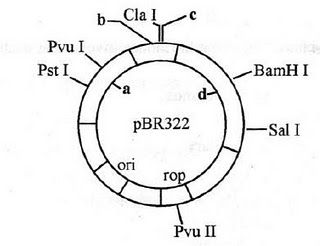
  1. Identify the selectable markers in the diagram of E. coli vector shown above.
  2. How is the coding sequence of a-galactosidase considered a better marker than the ones identified by you in the diagram? Explain.
Choose any three microbes, from the following which are suited for organic farming which is in great demand these days for various reasons. Mention one application of each one chosen.
Mycorrhiza; Monascus; Anabaena; Rhizobium; Methanobacterium; Trichoderma.
Match Column I with Column II.
S. No.
Column I
S. No.
Column II
A.
Acrosome
1. 
Motility of sperm towards the egg.
B.
Head
2.
Powerhouse of the sperm; contains a number of mitochondria.
C.
Tail
3.
Contains the genetic material.
D.
Middle piece
4.
Contains enzymes to dissolve egg envelopes.