Question
What is the modern basis of atomic mass?

Answer

Nowadays the atomic mass is determined according to $C -12$ standard. According to this, the atomic number of an element is the number from which it is known that any atom is how much heavier than
$\frac{1}{12}$ part of $C -12$. Hence one atomic mass unit $\frac{1}{12}^{\text {th }}$
part of mass of $C -12$.
$
1 amu=1.66056 \times 10^{-24} gm
$

Need a full question paper?

Generate a complete, print-ready paper with questions like this in minutes — across 16+ boards, with answer keys.
Start Generating Free

Similar questions

“Stability of carbocations depends upon the electron releasing inductive effect of groups adjacent to positively charged carbon atom involvement of neighbouring groups in hyperconjugation and resonance.”
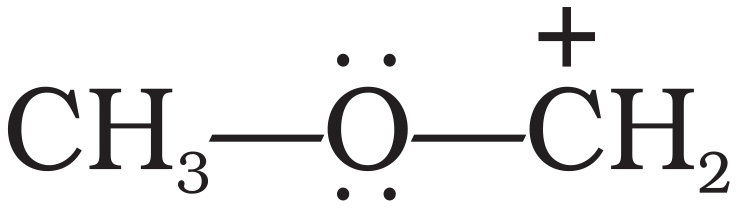
Draw the possible resonance structures for and predict which of the structures is more stable. Give reason for your answer.
Explain the following reactions:
Hydrated alumina is treated with aqueous NaOH solution.
Account for the following:
i. Arrange $LiCl , NaCl _2, BeCl _2$ in increasing order of covalent character.
ii. $CO _2$ turns the lime water milky. On passing $CO _2$ in excess, milkiness disappears.
(a) Differentiate between dissociation and ionization.
(b) What is the relationship between dielectric constant of solvent and electrostatic force between ions?
The Vividh Bharati station of All India Radio, Delhi, broadcasts on a frequency of 1,368kHz (kilohertz). Calculate the wavelength of the electromagnetic radiation emitted by transmitter. Which part of the electromagnetic spectrum does it belong to?
What is the oxidation number of Fe in ${\left[\mathrm{Fe}(\mathrm{CO})_5\right]}$?
Find oxidation state of ‘Cl' in
  1. $\text{ClO}_2$
  2. $\text{ClO}_3^-$
What is the basic theme of organisation in the periodic table?
What is the basic difference between the terms electron gain enthalpy and electronegativity?
Which of the following has larger bond angle in each pair?
i. $\mathrm{CO}_2, \mathrm{BF}_3$
ii. $\mathrm{NH}_3, \mathrm{CH}_4$
iii. $\mathrm{H}_2 \mathrm{O}, \mathrm{H}_2 \mathrm{~S}$
iv. $\mathrm{SiF}_4, \mathrm{C}_2 \mathrm{H}_2$