Question
what is the potential difference between two points, if 2J of work must be done to move a 4 mC charge from one point to another is:

Answer

  1. 500 V
Explanation:
The total work done = energy transferred.
So, we might see the equation energy = voltage x charge, E = V × Q, written as,
work = voltage x charge, W = V × Q.
In this case, the charge is 4 mC, that is, 0.004 C and work done is 2J.

Need a full question paper?

Generate a complete, print-ready paper with questions like this in minutes — across 16+ boards, with answer keys.
Start Generating Free

Similar questions

A film projector magnifies a $100 \ cm^2$ film strip on a screen. If the linear magnification is $4$ , the area of magnified film on the screen is
A current of two amperes is flowing through a cell of e.m.f. 5 volts and internal resistance 0.5 ohm from negative to positive electrode. If the potential of negative electrode is 10V, the potential of positive electrode will be(a) 5 V(b) 14 V(c) 15 V(d) 16 V
       
A radioactive substance has a half$-$life of $1$ year. The fraction of this material, that would remain after $5$ years will be
If half-life of a substance is 3.8 days and its quantity is 10.38 gm. Then substance quantity remaining left after 19 days will be(a) 0.151 gm(b) 0.32 gm(c) 1.51 gm(d) 0.16 gm
       
A steady current flows in a metallic conductor of non-uniform cross-section. The quantity/ quantities constant along the length of the conductor is/are(a) Current, electric field and drift speed(b) Drift speed only(c) Current and drift speed(d) Current only
   
   
Hubble showed that the universe as a whole is expanding and the distant stars are receding from us. The spectral line from a star, when compared with the corresponding line from an source will then show(a) A shift in frequency towards the red end(b) A shift in frequency towards the violet end(c) No shift in frequency at all(d) A shift in frequency towards the violet end as well as a decrease in intensity


The intrinsic semiconductor becomes an insulator at(a) 0℃(b) --100℃(c) 300 K(d) 0 K
       
Four wires $\text{AB, BC, CD, DA}$ of resistance $4$ ohm each and a fifth wire $B D$ of resistance $8$ ohm are joined to form a rectangle $\text{ABCD}$ of which $BD$ is a diagonal. The effective resistance between the points $A$ and $B$ is
$20$ ampere current is flowing in a long straight wire. The intensity of magnetic field at a distance $10 \ cm$ from the wire will be
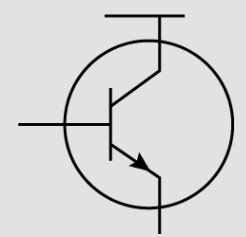
The lead marked with the arrow is the _______.