MCQ
When a longitudinal wave propagates through a medium, the particles of the medium execute simple harmonic oscillations about their mean positions. These oscillations of a particle are characterised by an invariant
  • A
    Kinetic energy
  • B
    Potential energy
  • Sum of kinetic energy and potential energy
  • D
    Difference between kinetic energy and potential energy
Answer

Correct option: C.
Sum of kinetic energy and potential energy
c
(c)Total energy is conserved.

Need a full question paper?

Generate a complete, print-ready paper with questions like this in minutes — across 16+ boards, with answer keys.

Start Generating Free

Similar questions

A physical quantity which has a direction
A black body is at a temperature $300 K$ . It emits energy at a rate, which is proportional to
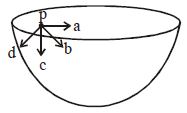
Figure shows a hemispherical shell. The direction of gravitational field intensity at point $p$ will be along
When a rubber ball is taken to the bottom of a sea of depth $1400 \,m$, its volume decreases by $2 \%$. The Bulk modulus of rubber ball is .................. $\times 10^8 N / m ^2$ [density of water is $1 \,g cc$ and $g=10 \,m / s ^2$ ]
A metallic particle having no net charge is placed near a finite metal plate carrying a positive charge. The electric force on the particle will be:
A $500 \,kg$ horse pulls a cart of mass $1500\, kg $ along a level road with an acceleration of $1\,m{s^{ - 2}}$. If the coefficient of sliding friction is $0.2$, then the force exerted by the horse in forward direction is ......... $N$
As the temperature of water increases, its viscosity
The ends $\mathrm{Q}$ and $\mathrm{R}$ of two thin wires, $\mathrm{PQ}$ and $RS$, are soldered (joined) togetker. Initially each of the wires has a length of $1 \mathrm{~m}$ at $10^{\circ} \mathrm{C}$. Now the end $\mathrm{P}$ is maintained at $10^{\circ} \mathrm{C}$, while the end $\mathrm{S}$ is heated and maintained at $400^{\circ} \mathrm{C}$. The system is thermally insulated from its surroundings. If the thermal conductivity of wire $\mathrm{PQ}$ is twice that of the wire $RS$ and the coefficient of linear thermal expansion of $P Q$ is $1.2 \times 10^{-5} \mathrm{~K}^{-1}$, the change in length of the wire $\mathrm{PQ}$ is
Five masses each of $2\,kg$ are placed on a horizontal circular disc, which can be rotated about a vertical axis passing through its centre and all the masses be equidistant from the axis and at a distance of $10\,cm$ from it. The moment of inertia of the whole system (in $gm-cm^2$ ) is (Assume disc is of negligible mass)
The equation of a progressive wave is $y = 8\sin \left[ {\pi \left( {\frac{t}{{10}} - \frac{x}{4}} \right) + \frac{\pi }{3}} \right]$. The wavelength of the wave is .... $m$