Question

When a PN junction diode is reverse biased

(a) Electrons and holes are attracted towards each other and move towards the depletion region

(b) Electrons and holes move away from the junction depletion region

(c) Height of the potential barrier decreases

(d) No change in the current takes place

Answer

(b) Electrons and holes move away from the junction depletion region

Need a full question paper?

Generate a complete, print-ready paper with questions like this in minutes — across 16+ boards, with answer keys.

Start Generating Free

Similar questions

In a full wave rectifiers, input ac current has a frequency ‘n’. The output frequency of current is

(a) n/2

(b) n

(c) 2n

(d) None of these

If a comb is rubbed on dry hairs, and then brought near paper pieces, it:

An air core solenoid has 1000 turns and is one metre long. Its cross-sectional area is 10 cm2. Its self inductance is

(a) 0.1256 mH

(b) 12.56 mH

(c) 1.256 mH

(d) 125.6 mH

Assertion  :   Magnetism is relativistic.

Reason      : When we move along with the charge so that there is no motion relative to us, we find no magnetic field associated with the charge.

(a) If both assertion and reason are true and the reason is the correct explanation of the assertion.

(b) If both assertion and reason are true but reason is not the correct explanation of the assertion.

(c) If assertion is true but reason is false.

(d) If the assertion and reason both are false.

According to Bohr hypothesis, discrete quantity is:

A 60 watt bulb carries a current of 0.5 amp. The total charge passing through it in 1 hour is           

(a) 3600 coulomb

(b) 3000 coulomb

(c) 2400 coulomb

(d) 1800 coulomb

The effective resistance between points A and B is

(a) 10 Ω  

(b) 20 Ω

(c) 40 Ω

(d) None of the above three values

Conservation of electric charges means that the total charge of an isolated system remains ____ with time.

Beta rays emitted by a radioactive material are

(a) Electromagnetic radiation

(b) The electrons orbiting around the nucleus

(c) Charged particles emitted by nucleus

(d) Neutral particles

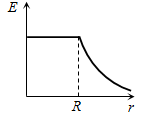
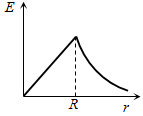
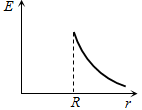
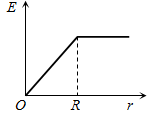
The electric field due to a uniformly charged sphere of radius R as a function of the distance from its centre is represented graphically by

(a)

(b)

(c)

(d)