Question
When a proton is accelerated with 1 volt potential difference, then its kinetic energy is
|
(a) |
(b) 1840 eV |
(c) 1 eV |
(d) 1840 c2 eV |
When a proton is accelerated with 1 volt potential difference, then its kinetic energy is
|
(a) |
(b) 1840 eV |
(c) 1 eV |
(d) 1840 c2 eV |
(c) 1 eV
Generate a complete, print-ready paper with questions like this in minutes — across 16+ boards, with answer keys.
A glass prism (μ = 1.5) is dipped in water (μ = 4/3) as shown in figure. A light ray is incident normally on the surface AB. It reaches the surface BC after totally reflected, if
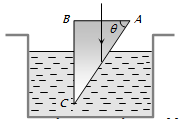
|
(a) sinθ ≥ 8/9 |
(b) 2/3 < sinθ < 8/9 |
(c) sin θ ≤ 2/3 |
(d) It is not possible |
The work function of aluminium is 4.2 eV. If two photons, each of energy 3.5 eV strike an electron of aluminium, then emission of electrons will be
|
(a) Possible |
|
(b) Not possible |
|
(c) Data is incomplete |
|
(d) Depend upon the density of the surface |
A point charge of 40 stat coulomb is placed 2 cm in front of an earthed metallic plane plate of large size. Then the force of attraction on the point charge is
|
(a) 100 dynes |
(b) 160 dynes |
(c) 1600 dynes |
(d) 400 dynes |
NPN transistor are preferred to PNP transistor because they have
|
(a) Low cost |
|
(b) Low dissipation energy |
|
(c) Capability of handing large power |
|
(d) Electrons having high mobility than holes |
