MCQ
When a semiconductor is heated, its resistance
  • Decreases
  • B
    Increases
  • C
    Remains unchanged
  • D
    Nothing is definite

Answer

Correct option: A.
Decreases
Decreases

Need a full question paper?

Generate a complete, print-ready paper with questions like this in minutes — across 16+ boards, with answer keys.

Start Generating Free

Similar questions

$540$ calories of heat convert $1$ cubic centimeter of water at $100^{\circ} \mathrm{C}$ into $1671$ cubic centimeter of steam at $100^{\circ} \mathrm{C}$ at a pressure of one atmosphere. Then the work done against the atmospheric pressure is nearly
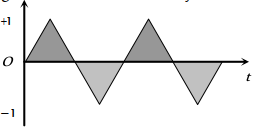
An alternating current of frequency $200 \mathrm{rad} / \mathrm{sec}$ and peak value $1 A$ as shown in the figure, is applied to the primary of a transformer. If the coefficient of mutual induction between the primary and the secondary is $1.5 \mathrm{H}$, the voltage induced in the secondary will be
Image
A manometer connected to a closed tap reads $4.5 \times 10^5$ pascal. When the tap is opened the reading of the manometer falls to $4 \times 10^5$ pascal. Then the velocity of flow of water is
If $1\ A$ of current is passed through $CuSO _4$ solution for $10$ seconds, then the number of copper ions deposited at the cathode will be about
A beaker containing a liquid is kept inside a big closed jar. If the air inside the jar is continuously pumped out, the pressure in the liquid near the bottom of the liquid will
If an ac main supply is given to be $220 V$. What would be the average e.m.f. during a positive half cycle
A particle of mass $m$ moving with velocity $V_0$ strikes a simple pendulum of mass $m$ and sticks to it. The maximum height attained by the pendulum will be
If work function of metal is $3\ \mathrm{eV}$ then threshold wavelength will be
The length of two open organ pipes are $l$ and $(l+\Delta l)$ respectively. Neglecting end correction, the frequency of beats between them will be approximately (Here $v$ is the speed of sound)
A ball hits a vertical wall horizontally at $10 \mathrm{~m} / \mathrm{s}$ bounces back at $10 \mathrm{m} / \mathrm{s}$