MCQ
When an ammeter is shunted its measuring range :
- ✓Increases
- BDecreases
- CRemains constant
- DNone of these
Generate a complete, print-ready paper with questions like this in minutes — across 16+ boards, with answer keys.
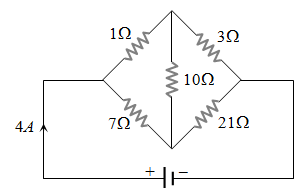
In the circuit shown in figure, the current drawn from the battery is 4A. If 10 W resistor is replaced by 20 W resistor, then current drawn from the circuit will be
|
(a) 1 A |
(b) 2 A |
(c) 3 A |
(d) 0 A |
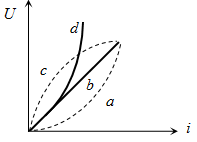
Which of the following plots may represent the thermal energy produced in a resistor in a given time as a function of the electric current
|
(a) a |
(b) b |
(c) c |
(d) d |
A parallel beam of light is incident on a converging lens parallel to its principal axis. As one moves away from the lens on the other side on its principal axis, the intensity of light:
Velocity of light in glass whose refractive index with respect to air is 1.5 is 2 × 10⁸ m/s and in certain liquid the velocity of light found to be 2.5 × 10⁸ m/s. The refractive index of the liquid with respect to air is
|
(a) 0.64 |
(b) 0.80 |
(c) 1.20 |
(d) 1.44 |
Equivalent capacitance between A and B is

|
(a) 8 μC |
(b) 6 μF |
(c) 26 μF |
(d) 10/3 μF |
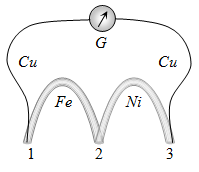
Three wires of copper, iron and nickel are joined to form three junctions as shown in Fig. When the temperature of junction 1 is kept 50℃ with the other two junctions at 0℃, the sensitive galvanometer gives a deflection of 14 divisions. When the temperature of junction 3 is kept 50℃, with the other two junctions at 0℃, the galvanometer gives a deflection of 11 divisions. Then the deflection given by the galvanometer, when temperature of the junction 2 is kept at 50℃, with the other two junctions at 0℃, will be
|
(a) 3 div |
(b) 11 div |
(c) 14 div |
(d) 25 div |