MCQ
When an object possess electric charge then the object is said to be:
- ACharged.
- BElectrified.
- CBoth a and b.
- DNone.
Generate a complete, print-ready paper with questions like this in minutes — across 16+ boards, with answer keys.
de-Broglie wavelength of a body of mass 1 kg moving with velocity of 2000 m/s is
|
(a) 3.32 × 10⁻²⁷ Å |
(b) 1.5 × 10⁷ Å |
(c) 0.55 × 10⁻²² Å |
(d) None of these |
The similarity between the sound waves and light waves is
|
(a) Both are electromagnetic waves |
|
(b) Both are longitudinal waves |
|
(c) Both have the same speed in a medium |
|
(d) They can produce interference |
If potential V = 100 ± 0.5 Volt and current I = 10 ± 0.2 amp are given to us. Then what will be the value of resistance
|
(a) 10 ± 0.7 ohm |
(b) 5 ± 2 ohm |
(c) 0.1 ± 0.2 ohm |
(d) None of these |
A particle with charge q, moving with a momentum p, enters a uniform magnetic field normally. The magnetic field has magnitude B and is confined to a region of width d, where d <  , The particle is deflected by an angle θ in crossing the field
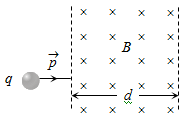
|
(a) sinθ = |
(b) sinθ = |
(c) sinθ = |
(d) sinθ = |
Wave which cannot travel in vacuum is
|
(a) X-rays |
(b) Infrasonic |
(c) Ultraviolet |
(d) Radiowaves |
The energy required to excite an electron from the ground state of hydrogen atom to the first excited state, is
|
(a) 1.602 |
(b) 1.619 |
(c) 1.632 |
(d) 1.656 |


