MCQ
When $C{H_3}COOH$ reacts with $C{H_3} - Mg - X$
- A$C{H_3}COX$is formed
- ✓Hydrocarbon is formed
- CAcetone is formed
- DAlcohol is formed
Generate a complete, print-ready paper with questions like this in minutes — across 16+ boards, with answer keys.
Statement $I$ : The rate law for the reaction $A+B \rightarrow C$ is rate $(r)=k[A]^2[B]$. When the concentration of both $\mathrm{A}$ and $\mathrm{B}$ is doubled, the reaction rate is increased " $\mathrm{x}$ " times.
Statement $II$ :
(Image)
The figure is showing "the variation in concentration against time plot" for a $"y"$ order reaction. The value of $x+y$ is . . . . . . 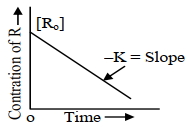
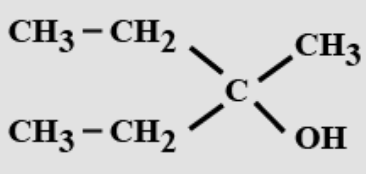
Statement $I:$ The boiling points of aldehydes and ketones are higher than hydrocarbons of comparable molecular masses because of weak molecular association in aldehydes and ketones due to dipole - dipole interactions.
Statement $II:$ The boiling points of aldehydes and ketones are lower than the alcohols of similar molecular masses due to the absence of $H$-bonding.
In the light of the above statements, choose the most appropriate answer from the options given below :