Question
When is vegetative propagation used? Name any three methods of vegetative propagation.

Answer

Vegetative propagation is a type of asexual reproduction. It is shown by almost every part of the plant body such as root, stem and leaves. Methods of vegetative propagation can be natural or artificial.
Natural Methods of Vegetative Propagation:
  1. From Root: Tuberous roots of sweet potato and asparagus become swollen due to storage of food. This forms the new plants in the next season.

  1. From Stem: Underground and subaerial stems are modified for vegetative propagation. Examples:
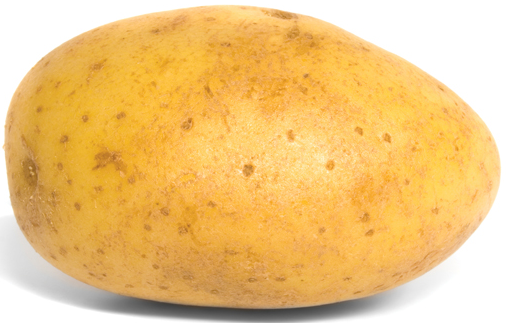
Tuber of potato is an underground stem which stores food. It has buds in the depression called eye which can give rise to a new plant.
  1. By leaves: leaves of bryophyllum bear adventitious buds in the Notches in the margin of the leaf. When leaf follows the ground beef buds grow to form the independent plant.
Artificial Methods of Vegetative Propagation:
Artificial vegetative propagation are man – made method of vegetative propagation developed by plant growers horticulturist for commercial production of crops. These include methods of cutting, layering, grafting and micropagationby plant tissue culture.
Cutting: Cutting is the method of propagation in which part from parent plant is cut and grown into a new plant. The various cutting include stem cutting, leaf cutting, etc. This method is often used in home gardening.
For example: Leaf cuttings of Begoniaare and Rose used to produce entire new plants.
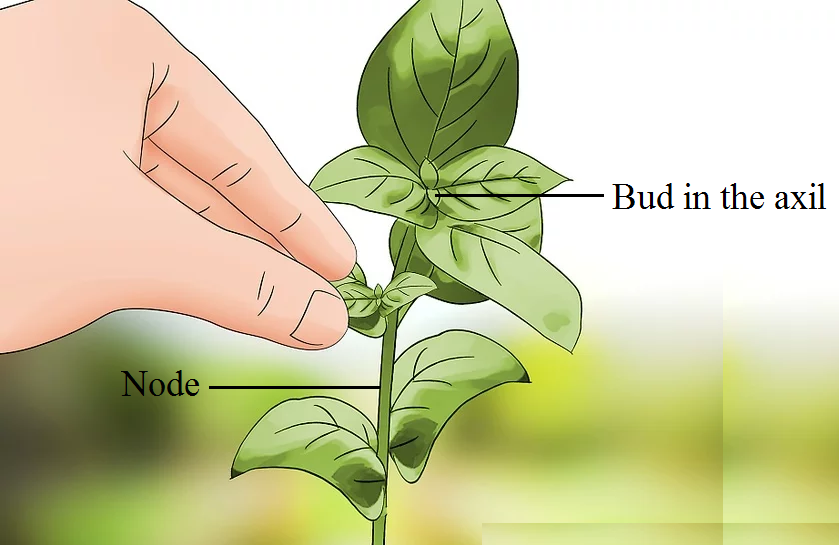
Grafting: Grafting is the common method of vegetative propagation. In this method two parts of plants-stock and scion are joined in such a way that they grow as one. It is performed between two closely relate dicotyledonous plants having vascular cambia.
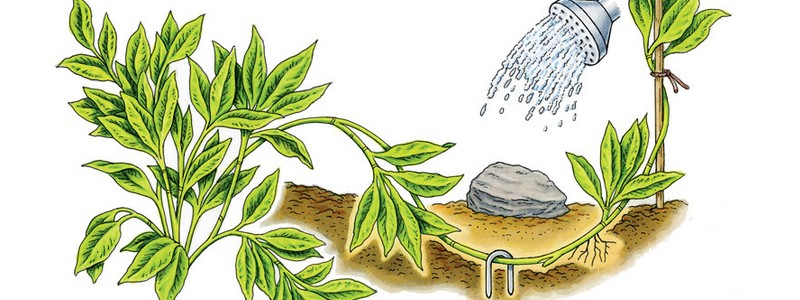
Layering: Layering is a type of artificial vegetative propagation. In this method, roots are artificially induced on the stem branches before they are detached from the parent plant for propagation.
For example: Mound layering is performed in jasmine.
​​​​​​​

Need a full question paper?

Generate a complete, print-ready paper with questions like this in minutes — across 16+ boards, with answer keys.

Start Generating Free

Similar questions

Describe the working of the human eye with the help of the above diagram.
An organic acid $X$ is a liquid, which often freezes during winter time in cold countries, having the molecular formula $C _2 H _4 O _2$. On warming it with methanol in the presence of a few drops of concentrated sulphuric acid, a compound Y with a sweet smell is formed.
a. Identify X and Y . Also write their formulae showing the functional group present in them.
b. Write a chemical equation for the reaction involved.
There are five animals A, B, C, D and E. The animal A uses its modified forelimbs for flying. The animal B uses its forelimbs for running whereas the animal C uses its forelimbs for grasping. The animal D can live on land as well as in water and uses its forelimbs to prop up the front end of its body when at rest. The animal E which respires by using spiracles and tracheae uses wings for flying but its wings are analogous to the modified forelimbs of animal A.
  1. What could the animals A, B, C, D and E be?
  2. Why are the forelimbs of animals A, B, C, D called homologous organs?
  3. What does the existence of homologous organs in animals A, B, C and D tell us about their ancestors?
  4. Why are the modified forelimbs of animal A and the wings of animal E called analogous organs?
  5. State whether animals A and E have a common ancestor or not.
What are the three types of methods used for birth control (or regulating child birth)? Give one example of each type.
State the cause of dispersion of white light by a glass prism. How did Newton, using two identical glass prisms, show that white light is made of seven colours ? Draw a ray diagram to show the path of a narrow beam of white light, through a combination of two identical prisms arranged together in inverted position with respect to each other, when it is allowed to fall obliquely on one of the faces of the first prism of the combination.
What are the three types of methods used for birth control (or regulating child birth)? Give one example of each type.
What change is made in the eye to enable it to focus on objects situated at different distances? Illustrate your answer with the help of diagrams.
What is a rainbow? Draw a labelled diagram to show the formation of a rainbow.
An object 60cm from a lens gives a virtual image at a distance of 20cm in front of the lens. What is the focal length of the lens? Is the lens converging or diverging? Give reasons for your answer.
$A. $State the relationship between the resistance $R$ of a wire to its length I and cross sectional area $A.$ Use the mathematical symbols to arrive at the final formula.
$B.$      Using the formula define the resistivity of a material.