Question
  1. Which agents cause allergy?
  2. How does the human body respond to allergens?

Answer

  1. The exaggerated or hypersensitive response of the immune system to certain agents in the environment is called allergy and its causing elements are called allergens.
  2. Symptoms of allergic reaction includes sneezing, watery eyes, rashes, running nose, difficulty in breathing, etc. Allergy occurs due to the release of chemicals like histamine and serotonin from the mast cells. Drugs like anti-histamine, adrenaline and steroids quickly reduce the symptoms of allergy.

Need a full question paper?

Generate a complete, print-ready paper with questions like this in minutes — across 16+ boards, with answer keys.
Start Generating Free

Similar questions

  1. Can a plant flowering in Mumbai be pollinated by pollen grains of the same species growing in New Delhi? Provide explanations to your answer.
  2. Draw the diagram of a pistil where pollination has successfully occurred. Label the parts involved in reaching the male gametes to its desired destination.
What are the limitations of ecological pyramids?
With the help of labelled diagram replication- al of retrovirus.
Your school has been selected by the Department of Education to organise and host an interschool seminar on 'Reproductive Health-Problems and Practices'. However, many parents are reluctant to permit their wards to attend it. Their argument is that the topic is 'too embarrassing'. Put forth four arguments with appropriate reasons and explanations to justify the topic to be very essential and timely.
Narrowly utilitarian arguments are put forth in support of biodiversity conservation. Explain the other two arguments that are put forth in support of the same cause.
Explain the following.
  1. What is the most common example of pleiotropy in humans?
  2. How are the pleiotropic genes useful?
A dihybrid heterozygous round, yellow seeded garden pea was crossed with a double recessive plant.
  1. What type of cross is this?
  2. Work out the genotype and phenotype of the progeny.
  3. What principle of Mendel is illustrated through the result of this cross?
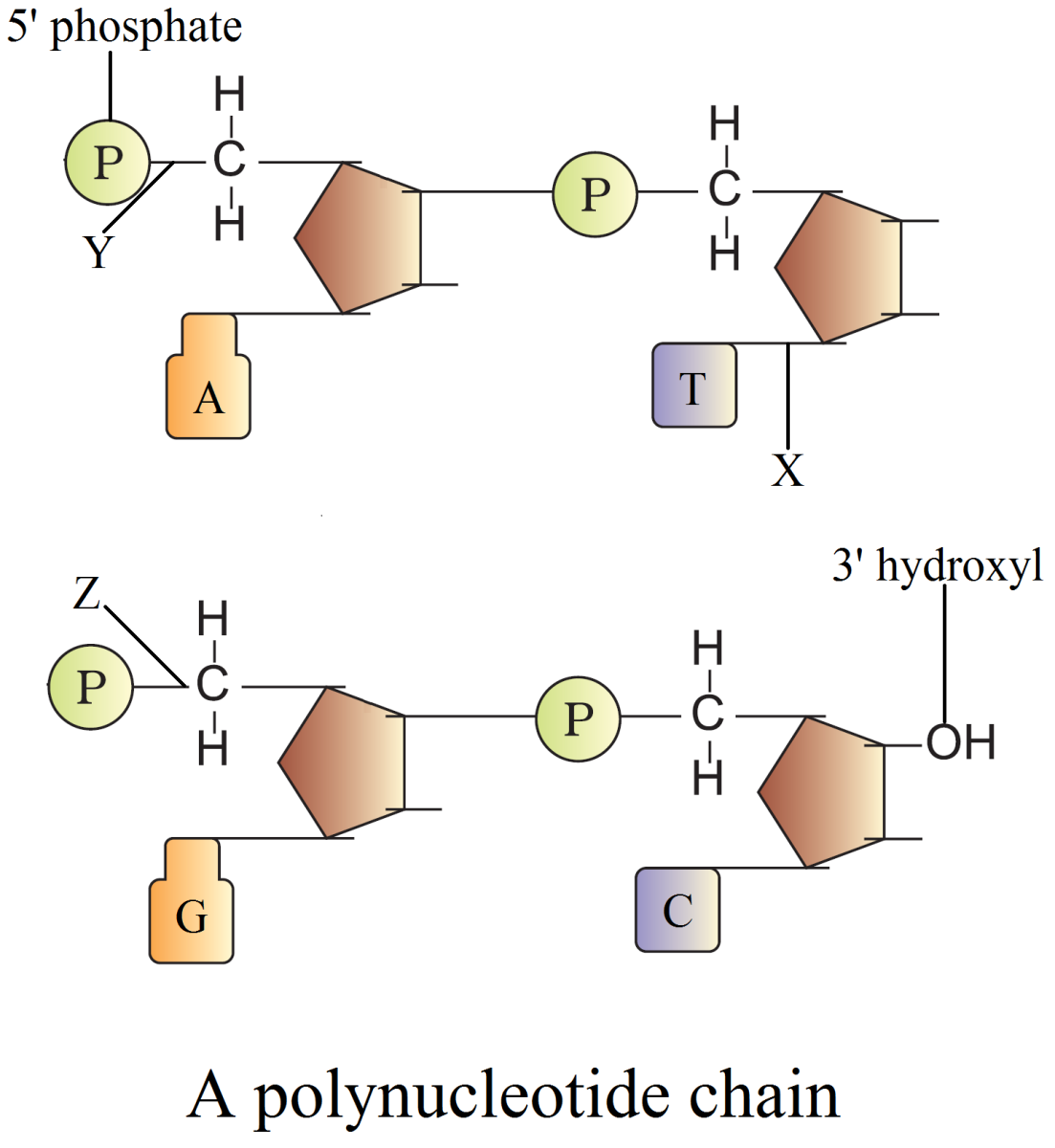
Study the diagram given below.

Name the linkage X, Y, Z and the respective molecules formed by them.
Write the formula for the change in population density.
Name the type of cell division that takes place in the zygote of an organism exhibiting haplontic life cycle.