MCQ
Which among the following reaction will take place spontaneously
  • $Cu(s) + 2AgNO_3(aq) \to Cu(NO_3)_2(aq) + 2Ag(s)$
  • B
    $Zn(s) + MgCl_2(aq) \to ZnCl_2(aq) + Mg(s)$
  • C
    $Mg(s) + Li_2SO_4(aq) \to MgSO_4(s) + 2Li(s)$
  • D
    $Ni(s) + ZnSO_4(aq) \to NiSO_4(aq) + Zn(s)$

Answer

Correct option: A.
$Cu(s) + 2AgNO_3(aq) \to Cu(NO_3)_2(aq) + 2Ag(s)$
a
$Cu$ has less electrode potential than $Ag$

Need a full question paper?

Generate a complete, print-ready paper with questions like this in minutes — across 16+ boards, with answer keys.

Start Generating Free

Similar questions

Chlorine can remove
$ $
A biological catalyst is essentially
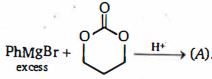
Product $(A)$ is
Phosphorus is manufactured by heating in a electric furnace a mixture of
Coloration of $B{r_2}/CC{l_4}$ will be discharged by
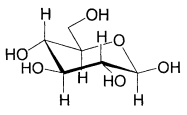
The following carbohydrate is
Presence of which reagent will affect the reversibility of the following reaction, and change it to a irreversible reaction:

$\mathrm{CH}_{4}+\mathrm{I}_{2} \underset{\text { Reversible }}{\stackrel{\mathrm{hv}}{\longrightarrow}} \mathrm{CH}_{3}-\mathrm{I}+\mathrm{HI}$ 

Which one of the following is not an intermediate in the generally accepted  mechanism for the reaction shown below ?

$\begin{matrix}
   O\,\,\,\,\,\,\,\,\,\,\,\,\,\,\,\,\,\,\,\,\,\,\,\,\,\,\,\,\,\,\,\,\,\,\,\,\,\,  \\
   ||\,\,\,\,\,\,\,\,\,\,\,\,\,\,\,\,\,\,\,\,\,\,\,\,\,\,\,\,\,\,\,\,\,\,\,\,\,\,\,\,  \\
   C{{F}_{3}}\,C\,OH+C{{H}_{3}}\,CH\,C{{H}_{3}}  \\
   \,\,\,\,\,\,\,\,\,\,\,\,\,\,\,\,\,\,\,\,\,\,\,\,\,\,\,\,\,\,|  \\
   \,\,\,\,\,\,\,\,\,\,\,\,\,\,\,\,\,\,\,\,\,\,\,\,\,\,\,\,\,\,\,\,\,OH  \\
\end{matrix}\xrightarrow{{{H}_{2}}S{{O}_{4}}}\begin{matrix}
   O\,\,\,\,\,\,\,\,\,\,\,\,\,\,\,\,\,\,\,\,\,\,\,\,\,\,\,\,\,\,\,  \\
   ||\,\,\,\,\,\,\,\,\,\,\,\,\,\,\,\,\,\,\,\,\,\,\,\,\,\,\,\,\,\,\,\,\,  \\
   C{{F}_{3}}\,C\,OCH\,C{{H}_{3}}+{{H}_{2}}O  \\
   |\,\,\,\,\,\,\,\,\,\,\,\, \,\,\,\, \\
   C{{H}_{3}}\,\,\,\,\,\,\,\,\,\,\,  \\
\end{matrix}$
Number of compounds from the following which will not produce orange red precipitate with Benedict solution is $..............$.  Glucose, maltose, sucrose, ribose,$2-$deoxyribose, amylose, lactose.