MCQ
Which compound on electrolysis produces $H_2$ gas at both electrode?
- A$MgH_2$ (molten)
- B$HCl$ (aq)
- C$NaH$ (molten)
- ✓$CaH_2$ (aq)
Generate a complete, print-ready paper with questions like this in minutes — across 16+ boards, with answer keys.
Statement $I$ : The rate law for the reaction $A+B \rightarrow C$ is rate $(r)=k[A]^2[B]$. When the concentration of both $\mathrm{A}$ and $\mathrm{B}$ is doubled, the reaction rate is increased " $\mathrm{x}$ " times.
Statement $II$ :
(Image)
The figure is showing "the variation in concentration against time plot" for a $"y"$ order reaction. The value of $x+y$ is . . . . . . 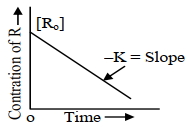
True statement about sequence on the basis of assumption that $R$ contains $3$ different groups is
$\mathop R\limits^{\delta \oplus } \,\mathop {Br}\limits^{\delta \,\Theta } \, \rightleftharpoons $ $\mathop {\boxed{{R^ \oplus }B{r^\Theta }}}\limits_{(a)} \,\,\, \rightleftharpoons \,$$\,\mathop {\boxed{{R^ \oplus }}\,\boxed{B{r^\Theta }}\,}\limits_{(b)} \,\, \rightleftharpoons $ ${\boxed{{R^ \oplus }}}$ $ \rightleftharpoons $ $\mathop {\,\boxed{B{r^\Theta }}\,}\limits_{(c)} \,$