MCQ
Which compound will react with an aqueous solution of $Ag(N{H_3})_2^ + O{H^ - }$
  • A
    $C{H_2} = C{H_2}$
  • B
    $C{H_3} - C{H_3}$
  • $C{H_3}C{H_2}C \equiv CH$
  • D
    $C{H_3} - C \equiv C - C{H_3}$

Answer

Correct option: C.
$C{H_3}C{H_2}C \equiv CH$
c
(c) Because $C{H_3}C{H_2} - C \equiv CH$ has one acidic hydrogen.

Need a full question paper?

Generate a complete, print-ready paper with questions like this in minutes — across 16+ boards, with answer keys.

Start Generating Free

Similar questions

$\mathop {C{H_3} - CH = O}\limits_{(I)}  \rightleftharpoons \mathop {C{H_2} = CH - OH}\limits_{(II)} $

Between the two tautomers which is more stable ?

Toluene in the vapour phase is in equilibrium with a solution of benzene and toluene having mole fraction of toulene $0.50$ If vapour pressure of pure benzene is $119\, torr$ and that of toluene is $37.0$ $torr$ at the same temperature, mole fraction of toluene in vapour phase will be:
The major product obtained in the following reaction is
For the alkali metals, which of the following increases with increasing atomic number?
Molality of an aqueous solution of urea is $4.44 \mathrm{~m}$. Mole fraction of urea in solution is $x \times 10^{-5}$. Value of $x$ is. . . . . . (integer answer)
Among the following, the optically inactive compound is
Benzene $ + C{l_{2(excess)}}\xrightarrow[\Delta ]{{AlC{l_3}}}x\,,$

$x$ is 

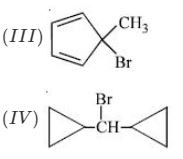
Arrange the following compounds in decreasing order of their reactivity for hydrolysis reaction

$(I)$ $C_6H_5-CH-Br$

$(II)$ $\begin{array}{*{20}{c}}
  {{C_6}{H_5} - CH - {C_2}{H_5}} \\ 
  {|\,\,\,} \\ 
  {Br} 
\end{array}$
Reaction of phenol with chloroform/sodium hydroxide to give $o$-hydroxy benzaldehyde involves the formation of
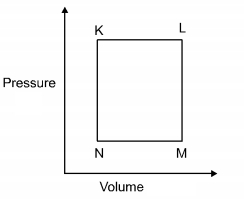
A fixed mass ' $m$ ' of a gas is subjected to transormation of states from $K$ to $L$ to $M$ to $N$ and back to $K$ as shown$Image$

$1.$ The succeeding operations that enable this transformation of states are

$(A)$ Heating, cooling, heating, cooling

$(B)$ Cooling, heating, cooling, heating

$(C)$ Heating, cooling, cooling, heating

$(D)$ Cooling, heating, heating, cooling

$2.$ The pair of isochoric processes among the transormation of states is

$(A)$ $K$ to $L$ and $L$ to $M$

$(B)$ $L$ to $M$ and $N$ to $K$

$(C)$ $L$ to $M$ and $M$ to $N$

$(D)$ $M$ to $N$ and $N$ to $K$

Give the answer question $1$ and $2.$