Question
Which different methods are used for transportation of patients? Why?

Answer

Following are the methods used for transportation of patients:
(i) Cradle method: Useful for children and under-weight victims.
(ii) Carrying piggy back: Useful for carrying patients who are unconscious.
(iii) Human crutch method: If one of the legs is injured, the victim should be supported with minimum load on the other leg.
(iv) Pulling or lifting method: This is used for carrying an unconscious patient, through a short distance.
(v) Carrying on four-hand chair: This is useful when support is needed for the part below the waist. 
(vi) Carrying on two-hand chair: Useful for those patients who can’t use their hands but can hold their body upright.
(vii) Stretcher: In an emergency, if a conventional stretcher is not available, then a temporary stretcher can be made using bamboos, blanket etc.
The use of methods depend on following things:
(i) Type of injury.
(ii) Intensity of injury 
(iii) Distance of the shelter from the accident place. 
(iv) Mode of transport.
(v) Number of helpers available.

Need a full question paper?

Generate a complete, print-ready paper with questions like this in minutes — across 16+ boards, with answer keys.
Start Generating Free

Similar questions

What is meant by the 'orbit of a satellite? On what basis and how are the orbits of artificial satellites classified?
Write short note: Cloning.
Refraction observed in the atmosphere.
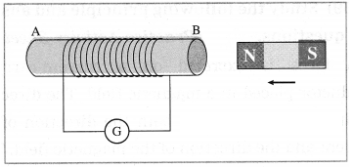
Take a coil AB having 10-15 turns. Connect the two ends of the coil to the galvanometer as shown in Figure. Take a strong bar magnet. (1) Move the north pole of the magnet towards the end B of the coil.
Image

Observe the deflection of the pointer in the galvanometer. Note the direction of the deflection (i.e. right or left). (2) Now repeat this with the south pole of the magnet towards the end B of the coil. Again observe the deflection. Note its direction. (3) What will happen if instead of the magnet, the coil is moved? (4) If both the coil and the magnet are kept stationary, do you observe any deflection? (5) Compare the direction of the deflection when the north pole of the magnet is moved towards the end B of the coil with that when the end B of the coil is moved away from the north pole of the magnet. (6) What conclusions do you draw from the observations?
Draw a neat labelled diagram: Forth floatation.
Which are the various ways to minimize stress?
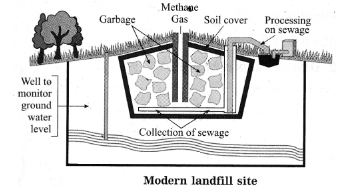
Observe the Figure and answer the following:
Image

(a) Identify the process shown in the figure.
(b) Explain the process in short.
Describe the construction and working of a biogas plant with the help of a labelled diagram.
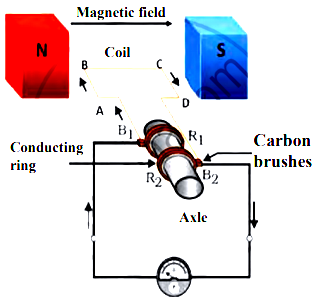
Observe the figure and write the answers to the questions asked.
  1. The construction shown in the figure is of which device?
  2. Explain the principle on which this device works.
  3. Write any three uses of this device.
What are the objectives of mock drill?