MCQ
Which enzyme convert glucose into alcohol
  • A
    Invertase
  • Zymase
  • C
    Maltase
  • D
    Diastase

Answer

Correct option: B.
Zymase
b
(b) Zymase enzyme convert glucose into alcohol. It is found in the yeast.

$\mathop {{C_6}{H_{12}}{O_6}}\limits_{{\text{glucose}}} \xrightarrow{{{\text{zymase}}}}\mathop {2{C_2}{H_5}OH + 2C{O_2}}\limits_{{\text{ethyl alcohol}}} $


Need a full question paper?

Generate a complete, print-ready paper with questions like this in minutes — across 16+ boards, with answer keys.

Start Generating Free

Similar questions

Carbylamine forms from aliphatic or aromatic primary amine via which of the following intermediates ?
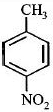
In a set of reactions $p-$ nitrotoluene yielded a product $E$. The product $E$ would be

(Figure) $\xrightarrow[FeB{{r}_{3}}]{B{{r}_{2}}}B\xrightarrow{Sn\,/\,HCl}C$ $\xrightarrow[HCl]{NaN{{O}_{2}}}D\xrightarrow[HBr]{CuBr}E$
Given below are two statements

Statement $I : CeO _{2}$ can be used for oxidation of aldehydes and ketones.

Statement $II :$ Aqueous solution of $EuSO _{4}$ is a strong reducing agent.

In the light of the above statements, choose the correct answer from the options given below

The equivalent conductances of two strong electrolytes at infinite dilution in $H_2O$ (where ions move freely through a solution) at $25^o C$ are given below : 

$\Lambda _{C{H_3}COONa}^o =91.0\, S \,cm^2 /equiv.$

$\Lambda _{HCl}^o =426.2 \,S \,cm^2 /equiv.$

What additional information$/$quantity one needs to calculate ${\Lambda ^o}$ of an aqueous solution of acetic acid ?

A biological catalyst is essentially
$HC\equiv CH\xrightarrow[{{H}_{2}}S{{O}_{4}}]{HgS{{O}_{4}}}\,\,\xrightarrow[HOH]{C{{H}_{3}}MgBr}\,\,\xrightarrow{P/B{{r}_{2}}}\left( X \right);$ $(X)$ is
When $CH_3-CH_2-COOH$ is reduced with $LiAlH_4$, the compound obtained will be
Which of the following has longest $C-O$ bond length? (Free $C-O$ bond length in $CO$ is $1.128\,\mathop A\limits^o $ )
The major product obtained on interaction of phenol with sodium hydroxide and carbon dioxide is
The nitrogen oxide(s) that contain$(s)$ $\mathrm{N}-\mathrm{N}$ bond$(s)$ is$(are)$

$(A)$ $\mathrm{N}_2 \mathrm{O}$ $(B)$ $\mathrm{N}_2 \mathrm{O}_3$ $(C)$ $\mathrm{N}_2 \mathrm{O}_4$ $(D)$ $\mathrm{N}_2 \mathrm{O}_5$