MCQ
Which is amphoteric oxides ?
- A$BeO$
- B$SnO$
- C$ZnO$
- ✓all of these
Generate a complete, print-ready paper with questions like this in minutes — across 16+ boards, with answer keys.
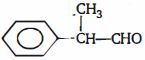
$\begin{array}{*{20}{c}}
{\,\,\,\,\,C{H_3}{\mkern 1mu} {\mkern 1mu} {\mkern 1mu} \,\,\,\,\,{\mkern 1mu} {\mkern 1mu} {\mkern 1mu} O{\mkern 1mu} } \\
{\,\,\,|{\mkern 1mu} {\mkern 1mu} {\mkern 1mu} {\mkern 1mu} {\mkern 1mu} {\mkern 1mu} {\mkern 1mu} {\mkern 1mu} {\mkern 1mu} {\mkern 1mu} {\mkern 1mu} \,\,\,\,\,\,\,\,\,\,{\mkern 1mu} {\mkern 1mu} ||} \\
{C{H_3} - CH - C - OH}
\end{array}$ $+ C{H_3} - N{H_2} \to 'A'\xrightarrow[\Delta ]{}'B'\xrightarrow{\begin{subarray}{l}
{\text{LiAl}}{{\text{H}}_4} \\
{\text{(excess)}}
\end{subarray} }'C'$
The final product $‘C’$ will be
(Given atomic number: $\mathrm{C}: 6, \mathrm{Na}: 11, \mathrm{O}: 8$, $\mathrm{Fe}: 26, \mathrm{Cr}: 24 \mathrm{~J}$
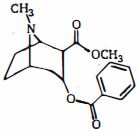
Reason: The electrical conductivity of metals is due to motion of electrons.