MCQ
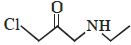
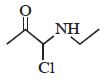
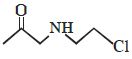
Which is most reactive halide towards ${{S}_{{{N}^{1}}}}$ reaction
  • A

  • B


  • D

Answer

Correct option: C.

c
Rate of ${{S}_{{{N}^{1}}}}$ reaction $\propto$ stability of carbocation

Need a full question paper?

Generate a complete, print-ready paper with questions like this in minutes — across 16+ boards, with answer keys.

Start Generating Free

Similar questions

Which of the following statement is incorrect ?
Which of the following show diagonal relationship
For 'invert sugar', the correct statement(s) is(are)

(Given: specific rotations of ($+$)-sucrose, ($+$)-maltose, $L$-($-$)-glucose anc. $+(+)$-fructose in aqueous solution are $+66^{\circ},+140^{\circ},-52^{\circ}$ and $+92^{\circ}$, respectively)

($A$) 'invert sugar' is prepared by acid catalyzed hydrolysis of maltose

($B$) . 'invert sugar' is an equimolar mixture of $D$-($+$)-glucose and $D$-($-$)-fructose

($C$) specific rotation of 'invert sugar' is $-20^{\circ}$

($D$) on reaction with $\mathrm{Br}_2$ water, 'invert sugar' forms saccharic acid as one of the products

An example of double salt is
$A\,\xrightarrow{{A{g_2}O}}$ ppt

$A\,\xrightarrow{{H{g^{2 + }}\,/\,{H^ + }}}B\,\xrightarrow{{NaB{H_4}}}C\,\xrightarrow[{conc.\,\,HCl}]{{ZnC{l_2}}}$  Turbidity within $5$ minutes.

Consider the following reactions $‘A’$ is

Two solution labelled as $3\,M\,HCl$ and $1\,M\,HCl$ are mixed in the ratio of $x : y$ by volume and the molarity of resulting solution is $1.5\,M$. ....... $M$ the molarity of the resulting solution if they are mixed in the ratio $y : x$ by volume.
Consider the following reversible reaction,$A ( g )+ B ( g ) \rightleftharpoons AB ( g ) \text {. }$
The activation energy of the backward reaction exceeds that of the forward reaction by $2RT$ (in $J mol ^{-1}$ ). If the pre-exponential factor of the forward reaction is $4$ times that of the reverse reaction, the absolute value of $\Delta G ^{\ominus}$ (in $J mol ^{-1}$ ) for the reaction at $300 K$ is $ . . . ($Given; $\ln (2)=0.7, RT =2500 J mol ^{-1}$ at $300 K$ and $G$ is the Gibbs energy$)$
The total number of orbitals present for principle quantum number, $n=4$ is
Consider the following reactions in which all the reactants and products are in gaseous state

${\text{2PQ}} \rightleftharpoons {{\text{P}}_2}{\text{  +  }}{{\text{Q}}_2}\,;\,\,\,\,{{\text{K}}_1}{\text{ =  2}}{\text{.5 }} \times \,{\text{1}}{{\text{0}}^5}\,$

${\text{PQ + }}\frac{1}{2}{R_2} \rightleftharpoons PQR\,;\,\,\,\,{{\text{K}}_2}{\text{ =  5 }} \times \,{\text{1}}{{\text{0}}^{ - 3}}\,$

The value of equilibrium constant for reaction

$\frac{1}{2}{{\text{P}}_2}{\text{ + }}\frac{1}{2}{{\text{Q}}_2}{\text{ + }}\frac{1}{2}{R_2} \rightleftharpoons PQR\,$ is

Which of the following reagents would carry out the following transformation ? $(D =2H)$