MCQ
Which match is not incorrect ?
  • A
    $CsI_3 \Rightarrow C{s^ + },3{I^ - }$
  • B
    $TiC{l_3} \Rightarrow T{l ^{ + 1}},Cl _3^ - $
  • C
    ${\text{GaC}}{{\text{l}}_3} \Rightarrow G{a^{ + 1}},Cl_3^ - $
  • ${\text{InC}}{{\text{l}}_3} \Rightarrow \operatorname{I} {n^{ + 3}},3C{l^ - }$

Answer

Correct option: D.
${\text{InC}}{{\text{l}}_3} \Rightarrow \operatorname{I} {n^{ + 3}},3C{l^ - }$
d

Need a full question paper?

Generate a complete, print-ready paper with questions like this in minutes — across 16+ boards, with answer keys.

Start Generating Free

Similar questions

$IUPAC$ name of is $\begin{array}{*{20}{c}}
  {\,\,\,\,\,\,\,\,H\,\,\,\,\,\,{C_4}{H_9}} \\ 
  {|\,\,\,\,\,\,\,\,\,\,|} \\ 
  {C{H_3} - C - C - C{H_3}} \\ 
  {|\,\,\,\,\,\,\,\,\,|} \\ 
  {\,\,\,\,{C_2}{H_5}\,\,C{H_3}} 
\end{array}$
The elements $X,\,Y$ and $Z$ forms oxides which are acidic, basic and amphoteric respectively, then correct order of their electronegativities is
Which one of the following reagents is used for detection of unsaturation in alkenes
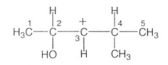
In the following carbocation, $\mathrm{H} / \mathrm{CH}_3$ that is most likely to migrate to the positively charged carbon is
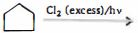
How many dichloro products are formed in the above reaction (including stereoisomers)?
$\begin{array}{*{20}{c}}
  {C{H_3}\,\,\,\,\,\,\,\,\,\,\,\,\,\,\,\,\,\,\,\,\,\,\,\,\,\,\,\,\,\,\,\,\,\,\,\,\,\,\,\,\,\,\,\,\,\,\,\,\,\,\,\,\,\,\,\,\,\,\,\,\,\,\,\,\,\,\,\,\,\,\,\,\,\,\,\,\,\,\,\,\,\,\,} \\ 
  {|\,\,\,\,\,\,\,\,\,\,\,\,\,\,\,\,\,\,\,\,\,\,\,\,\,\,\,\,\,\,\,\,\,\,\,\,\,\,\,\,\,\,\,\,\,\,\,\,\,\,\,\,\,\,\,\,\,\,\,\,\,\,\,\,\,\,\,\,\,\,\,\,\,\,\,\,\,\,\,\,\,\,\,\,\,\,\,\,\,} \\ 
  {C{H_3} - C = C{H_2} + {{(C{H_3})}_2}CHC{H_3}\xrightarrow[{273\,K}]{{HF}}{C_8}{H_{18}}(A)} 
\end{array}$ Unknown $(A)$ in the above reaction is
The number of orbitals present in the shell with $n = 4$ is
Which of the following oxides is most acidic?
The free energy change for the following reactions are given below,${C_2}{H_2}(g) + \frac{5}{2}{O_2}(g)\, \to $$2C{O_2}(g) + {H_2}O(l);\,\Delta {G^o} = - 1234\,kJ$ $C(s) + {O_2}(g)\, \to C{O_2}(g)\,\,\Delta {G^o} = - 394\,kJ$${H_2}(g) + \frac{1}{2}{O_2}(g)\, \to \,{H_2}O(l)\,\,\,\Delta {G^o} = - 237\,kJ$

What is the standard free energy change for the reaction ${H_2}(g) + 2\,C\,(s) \to {C_2}{H_2}(g)$ .....$kJ$

For the reaction $C{H_3}COOC{H_3} + {H_2}O\xrightarrow{{{H^ + }}}$ $C{H_3}COOH + C{H_3}OH$ The progress of the process of reaction is followed by