MCQ
Which molecules has zero dipole moment
- A${H_2}O$
- ✓$C{O_2}$
- C$HF$
- D$HBr$
Generate a complete, print-ready paper with questions like this in minutes — across 16+ boards, with answer keys.
$(A)$ Uncertainty principle rules out the existence of definite paths for electrons.
$(B)$ The energy of an electron in $2 s$ orbital of an atom is lower than the energy of an electron that is infinitely far away from the nucleus.
$(C)$ According to Bohr's model, the most negative energy value for an electron is given by $n=1$, which corresponds to the most stable orbit.
$(D)$ According to Bohr's model, the magnitude of velocity of electrons increases with increase in values of $n$.
$\mathrm{CO}_2, \mathrm{NO}_2, \mathrm{H}_2 \mathrm{SO}_4, \mathrm{BF}_3, \mathrm{CH}_4, \mathrm{SiF}_4, \mathrm{ClO}_2, \mathrm{PCl}_5,$ $\mathrm{BeF}_2, \mathrm{C}_2 \mathrm{H}_6, \mathrm{CHCl}_3, \mathrm{CBr}_4$
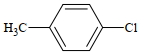
$[A]$ $4$-methylchlorobenzene $[B]$ $4$-chlorotoluene $[C]$ $1$-chloro-$4$-methylbenzene $[D]$ $1$-methyl-$4$-chlorobenzene