MCQ
Which of the following biphenyls is optically active?
- A
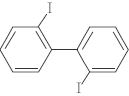
- B
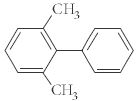
- C
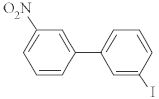
- ✓
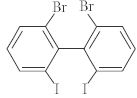
Generate a complete, print-ready paper with questions like this in minutes — across 16+ boards, with answer keys.
$(I)\, H_2S_2O_6$ $(II)\, H_2S_2O_3$ $(III)\,H_2S_2O_5$
Assertion $(A) :$ Metallic character decreases and non-metallic character increases on moving from left to right in a period.
Reason $(R)$ $:$ It is due to increase in ionisation enthalpy and decrease in electron gain enthalpy, when one moves from left to right in a period.
In the light of the above statements, choose the most appropriate answer from the options given below :
$(A)$ The principal quantum number $'n'$ is a positive integer with values of $'n'=1,2,3, \ldots$.
$(B)$ The azimuthal quantum number $'l'$ for a given $'n'$ (principal quantum number) can have values as $'l'=0,1,2, \ldots n$
$(C)$ Magnetic orbital quantum number $'m _{l}'$ for a particular $'l'$ (azimuthal quantum number) has $(2 l$ + 1) values.
$(D)$ $\pm 1 / 2$ are the two possible orientations of electron spin.
$(E)$ For $l=5$, there will be a total of $9$ orbital.
Which of the above statements are correct?
$C + 2S \to CS_2 ; \,\Delta H_f^o = +117.0\,kJ\,mol^{-1} .......(1)$
$C + O_2 \to CO_2 ; \,\Delta H_f^o = -393\,kJ\,mol^{-1} .......(2)$
$S + O_2 \to SO_2 ; \, \Delta H_f^o = -297\,kJ\,mol^{-1} .......(3)$
The heat of reaction of
$CS_2 + 3O_2 \to CO_2 + 2SO_2$ is
.....$kJ\,mol^{-1}$