MCQ
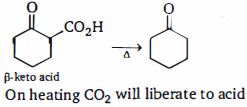
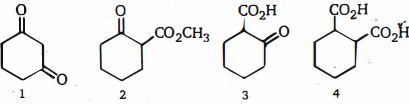
Which of the following compounds will undergo decarboxylation on heating ?
  • A
    $2$ and $3$
  • B
    $3$ and $4$
  • $3$ only
  • D
    $1$ and $4$

Answer

Correct option: C.
$3$ only
c

Need a full question paper?

Generate a complete, print-ready paper with questions like this in minutes — across 16+ boards, with answer keys.
Start Generating Free

Similar questions

A mixture of ethyl alcohol and propyl alcohol has a vapour pressure of $290 \,mm$ at $300\, K.$ The vapour pressure of propyl alcohol is $200\, mm.$ If the mole fraction of ethyl alcohol is $0.6,$ its vapour pressure ( in $mm$) at the same temperature will be
Many Lanthanoid elements are used to prepare:
Two solutions $A $ and $B$ are separated by semi- permeable membrane. If liquid flows form $ A $ to $ B$ then]
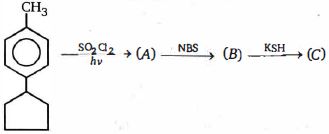
Product $(C)$ is
All possible optical isomers of the complex are $[Pt(NH_3)_2(CN)_2]$
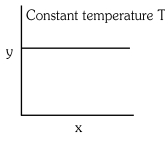
The given graph is a representation of kinetics of a reaction.

$[Image]$

The $y$ and $x$ axes for zero and first order reactions, respectively are
The sum of bridging carbonyls in $W ( CO )_6$ and $Mn _2$ $( CO )_{10}$ is $............$.
Consider a reaction $\mathrm{aG}+\mathrm{bH} \rightarrow$ Products. When concentration of both the reactants $\mathrm{G}$ and $\mathrm{H}$ is doubled, the rate increases by eight times. However, when concentration of $\mathrm{G}$ is doubled keeping the concentration of $\mathrm{H}$ fixed, the rate is doubled. The overall order of the reaction is
Ether is formed when ethyl alcohol is heated with conc. ${H_2}S{O_4}.$ The conditions are
Given 

$F{e^{ + 3}}\left( {aq} \right) + {e^ - } \to F{e^{2 + }}\left( {aq} \right);{E^o} =  + 0.77\,V$

$A{l^{ + 3}}\left( {aq} \right) + 3{e^ - } \to Al\left( s \right);{E^o} =  - 1.66\,V$

$B{r_2}\left( {aq} \right) + 2{e^ - } \to 2B{r^ - };{E^o} =  + 1.09\,V$

Considering the electrode potentials, which of the following represents the correct order of reducing power?