MCQ
Which of the following does not reduce fehling's solution ?
  • A
    Glucose
  • B
    Benzaldehyde
  • C
    Sucrose
  • Both $(B)$ and $(C)$

Answer

Correct option: D.
Both $(B)$ and $(C)$
d

Need a full question paper?

Generate a complete, print-ready paper with questions like this in minutes — across 16+ boards, with answer keys.

Start Generating Free

Similar questions

An aqueous solution of aluminium sulphate shows
Which of the following complex compounds will exhibit highest paramagnetic behaviour

(At. No. $Ti = 22, Cr = 24, Co = 27, Zn = 30$ )

Which one is not an organometallic compound
Which of the following is $2$ -carboxy ethyl ?
Which one of the following does not represent Arrhenius equation
The oxygen dissolved in water exerts a partial pressure of $20\, kPa$ in the vapour above water. The molar solubility of oxygen in water is ............ $-\times 10^{-5}\, mol\, dm ^{-3}$

(Round off to the Nearest Integer).

[Given : Henry's law constant $= K _{ H }=8.0 \times 10^{4} kPa$ for $O _{2}$ Density of water with dissolved oxygen $=1.0\, kg\, dm ^{-3}$ ]

$R-NH-COH\underset{\text{pyridine}}{\mathop{\xrightarrow{POC{{l}_{3}}}}}\,$ product     

In the given reaction what will be the product

The smallest cation and the smallest anion are respectively
Reaction of iso-propylbenzene with $O _2$ followed by the treatment with $H _3 O ^{+}$forms phenol and a by-product $P$. Reaction of $P$ with $3$ equivalents of $Cl _2$ gives compound $Q$. Treatment of $Q$ with $Ca ( OH )_2$ produces compound $R$ and calcium salt $S$.

The correct statement($s$) regarding $P , Q , R$ and $S$ is(are)

$(A)$ Reaction of $P$ with $R$ in the presence of $KOH$ followed by acidification gives

$(B)$ Reaction of $R$ with $O _2$ in the presence of light gives phosgene gas

$(C)$ $Q$ reacts with aqueous $NaOH$ to produce $Cl _3 CCH _2 OH$ and $Cl _3 CCOONa$

$(D)$ $S$ on heating gives $P$
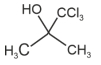
The number of meso form of the given compound is

$\begin{array}{*{20}{c}}
  {C{H_3} - CH - CH - CH - C{H_3}} \\ 
  {|\,\,\,\,\,\,\,\,\,\,\,\,\,\,|\,\,\,\,\,\,\,\,\,\,\,\,|\,\,\,\,\,} \\ 
  {OH\,\,\,\,\,\,\,OH\,\,\,\,\,OH\,\,} 
\end{array}$