Question

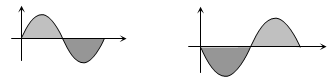
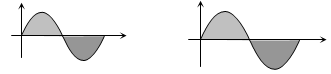
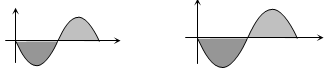
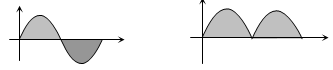
Which of the following figures correctly shows the phase relation between the input signal and the output signal of triode amplifier

 (a)

(b)

(c)

(d)

Answer

 (a)

Need a full question paper?

Generate a complete, print-ready paper with questions like this in minutes — across 16+ boards, with answer keys.

Start Generating Free

Similar questions

In the circuit shown in figure, the heat produced in 5 ohm resistance is 10 calories per second. The heat produced in 4 resistance is

(a) 1 cal / sec

(b) 2 cal/sec

(c) 3 cal / sec

(d) 4 cal/sec

Heat produced in a wire of resistance R due to current flowing at constant potential difference is proportional to

(a)  

(b)  

(c) R 

(d)  

A current of 16 ampere flows through molten NaCl for 10 minute. The amount of metallic sodium that appears at the negative electrode would be

(a) 0.23 gm

(b) 1.15 gm

(c) 2.3 gm

(d) 11.5 gm

A metal wire is subjected to a constant potential difference. When the temperature of the metal wire increases, the drift velocity of the electron in it:

The output of a NAND gate is 0

(a) If both inputs are 0

(b) If one input is 0 and the other input is 1

(c) If both inputs are 1

(d) Either if both inputs are 1 or if one of the inputs is 1 and the other 0

When a current of 1 ampere is passed through a conductor whose ends are maintained at temperature difference of 1 , the amount of heat evolved or absorbed is called

(a) Peltier coefficient

(b) Thomson coefficient

(c) Thermoelectic power

(d) Thermo e.m.f.

Ampere’s circuital law is equivalent to:

The focal length of a convex mirror is 20 cm its radius of curvature will be

(a) 10 cm

(b) 20 cm

(c) 30 cm

(d) 40 cm

The correct order of ionizing capacity of α, β and γ - rays is

(a) α >  γ > β

(b) α > β > γ

(c) α < β <γ

(d) α > β > γ

The electric field due to an electric dipole at a distance r from its centre in axial position is E. If the dipole is rotated through an angle of 90° about its perpendicular axis, the electric field at the same point will be

(a) E 

(b) E/4

(c) E/2

(d) 2E