MCQ
Which of the following is a transitional element
  • A
    $Al$
  • B
    $As$
  • $Ni$
  • D
    $Rb$

Answer

Correct option: C.
$Ni$
c
Hint: A transition metal contains partially filled d- subshell and has the configuration $( n -1) d ^{1-10} ns ^2$

Explanation:

The electronic configuration of nickel is $[ Ar ] 3 d ^8 4 s ^2$ which is in sync with the general electronic configuration of a transition element $(n-1) d^{1-10} ns ^2$.

Aluminum, arsenic, and lead don't possess the required configuration so they are not the transition elements.

The electronic configuration of Nickel is $[ Ar ] 3 d ^8 4 s ^2$. So it is a transition element.

Need a full question paper?

Generate a complete, print-ready paper with questions like this in minutes — across 16+ boards, with answer keys.

Start Generating Free

Similar questions

What will be the change in the oxidation state of Cr when $SO _2$ gas is passed into the aqueous solution of $K _2 Cr _2 O _7$ ?
For the electro chemical cell

$\mathrm{M}\left|\mathrm{M}^{2+}\right||\mathrm{X}| \mathrm{X}^{2-}$

If $\mathrm{E}_{\left(\mathrm{M}^{2+} / \mathrm{M}\right)}^0=0.46 \mathrm{~V}$ and $\mathrm{E}_{\left(\mathrm{x} / \mathrm{X}^{2-}\right)}^0=0.34 \mathrm{~V}$.

Which of the following is correct?

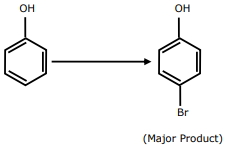
The given reaction can occur in the presence of:

$(1)$ Bromine water        $(2)$ $\mathrm{Br}_{2}$ in $\mathrm{CS}_{2}, 273 \mathrm{~K}$       $(3)$ $\mathrm{Br}_{2} / \mathrm{FeBr}_{3}$    $(4)$ $\mathrm{Br}_{2}$ in $\mathrm{CHCl}_{3}, 273 \,\mathrm{~K}$

Choose the correct answer from the options given below:
A non ideal solution was prepared by mixing $30\,ml$ chloroform and $50\,ml$ acetone. The volume of mixture will be
The molal boiling point constant for water is ${0.513\,^o}C\,kg\,mo{l^{ - 1}}$. When $0.1 $ mole of sugar is dissolved in $200\,ml$ of water, the solution boils under a pressure of one atmosphere at ......... $^oC$.
Standard reduction potentials of the half reactions are given below :

$F_{2(g)} + 2e^- \rightarrow 2F^-_{(aq)}\, ;$  $E^o = + 2.85\, V$

$Cl_{2(g)} + 2e^- \rightarrow 2Cl^-_{(aq)}\, ;$   $E^o = + 1.36\, V$

$Br_{2(l)} + 2e^- \rightarrow 2Br^-_{(aq)}\, ;$  $E^o = + 1.06\, V$

$I_{2(s)} + 2e^- \rightarrow 2I^-_{(aq)}\, ;$  $E^o = + 0.53\, V$

The strongest oxidising and reducing agents respectively are

$2.5 \mathrm{~g}$ of a non-volatile, non-electrolyte is dissolved in $100 \mathrm{~g}$ of water at $25^{\circ} \mathrm{C}$. The solution showed a boiling point elevation by $2^{\circ} \mathrm{C}$. Assuming the solute concentration in negligible with respect to the solvent concentration, the vapour pressure of the resulting aqueous solution is . . . . . .  $\mathrm{mm}$ of $\mathrm{Hg}$ (nearest integer)

[Given : Molal boiling point elevation constant of water $\left(\mathrm{K}_{\mathrm{b}}\right)=0.52 \mathrm{K.} \mathrm{kg} \mathrm{mol}^{-1}$,

$1 \mathrm{~atm}$ pressure $=760 \mathrm{~mm}$ of $\mathrm{Hg}$, molar mass of water $\left.=18 \mathrm{~g} \mathrm{~mol}^{-1}\right\rfloor$
The ammonia prepared by treating ammonium sulphate with calcium hydroxide is completely used by $\mathrm{NiCl}_2 .6 \mathrm{H}_2 \mathrm{O}$ to form a stable coordination compound. Assume that both the reactions are $100 \%$ complete. If $1584 \mathrm{~g}$ of ammonium sulphate and $952 \mathrm{~g}$ of $\mathrm{NiCl}_2 \cdot 6 \mathrm{H}_2 \mathrm{O}$ are used in the preparation, the combined weight (in grams) of gypsum and the nickelammonia coordination compound thus produced is $\qquad$ (Atomic weights in $\mathrm{g} \mathrm{mol}^{-1}: \mathrm{H}=1, \mathrm{~N}=14, \mathrm{O}=16, \mathrm{~S}=32, \overline{\mathrm{Cl}=35.5}, \mathrm{Ca}=40, \mathrm{Ni}=59$ )
Among Na, Hg, S, Pt and graphite, which can be used as electrodes in electrolytic cells having aqueous solutions?
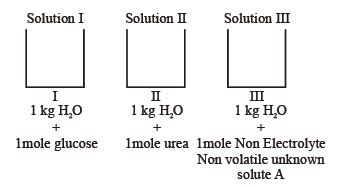
Order of $B.P$ of the solution formed is