MCQ
Which of the following statement is correct about $A$ and $B$ ?

- ✓$A$ and $B$ are mixture of diastereomers
- B$A$ and $B$ are mixture of enantiomers
- C$A$ and $B$ are optically active
- D$B$ is racemic mixture
Generate a complete, print-ready paper with questions like this in minutes — across 16+ boards, with answer keys.
$(A)$ $0.01 \,M\, HCl$
$(B)$ $0.01 \,M \,NaOH$
$(C)$ $0.01 \,M \,CH _{3} COONa$
$(D)$ $0.01 \,M \,NaCl$
$HI \rightleftharpoons \frac {1}{2} H_{2(g)} + \frac{1}{2} I_{2(g)}$
is $8.0$. The equilibrium constant of the reaction
$H_{2( g )} + I_{2(g)} \rightleftharpoons 2HI_{ ( g )}$ will be
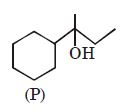
(image) $\frac{{{H_2}}}{{pd - BaS{O_4}}}\,'A'$
The product $'A'$ is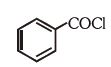
The time taken for $A$ to become $1 / 4^{\text {th }}$ of its inital concentration is twice the time taken to become $1 / 2$ of the same. Also, when the change of concentration of $B$ is plotted against time, the resulting graph gives a straight line with a negative slope and a positive intercept on the concentration axis. The overall order of the reaction is . . . . .