MCQ
Which of the following statement is incorrect?
  • A
    $N{{\overset{\Theta }{\mathop{O}}\,}_{3}}$ ion oxidises $Cu$ but $\overset{\oplus }{\mathop{H}}\,$ ion can not oxidise $Cu$.
  • B
    $AgNO_3$ solution can not be stored in copper container.
  • Hydrogen gas can reduce Zinc ion $(Zn^{+2})$
  • D
    ${{F}^{\Theta }}$ ion is weakest reducing agent
Answer

Correct option: C.
Hydrogen gas can reduce Zinc ion $(Zn^{+2})$
c

Need a full question paper?

Generate a complete, print-ready paper with questions like this in minutes — across 16+ boards, with answer keys.

Start Generating Free

Similar questions

$\alpha -D$ Glucopyranose and $\beta -D$ Glucopyranose are
Identify the homoleptic complexes with odd number of d electrons in the central metal.
(A) $\left[ FeO _4\right]^{2-}$
(B) $\left[ Fe ( CN )_6\right]^{3-}$
(C) $\left[ Fe ( CN )_5 NO \right]^{2-}$
(D) $\left[ CoCl _4\right]^{2-}$
(E) $\left[ Co \left( H _2 O \right)_3 F_3\right]$
Choose the correct answer from the options given below :
According to molecular theory, the species among the following that does not exist is
The number of $d$ electrons in $F{e^{ + 2}}$ (atomic number of $Fe = 26$) is not equal to that of the
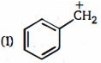
Which of the following options is the correct order of relative stabilities of cations $I, II$ and $III$ as written below (most stable first) ?

$(II)\,\,\,{{H}_{2}}C=CH-C{{H}_{2}}-\overset{+}{\mathop{C}}\,H-C{{H}_{3}}$

$(III)\,\,\,\begin{matrix}
   \,\,\,\,\,C{{H}_{3}}\,  \\
   |\,  \\
   {{H}_{3}}C-C-\overset{+}{\mathop{C}}\,{{H}_{2}}  \\
   |\,  \\
   \,\,\,C{{H}_{3}}  \\
\end{matrix}$

Which of the following $C -H$ bond has the least bond dissociation energy?
When $1.0\  g$ of solid oxalic acid ($H_2C_2O_4$) is burned in a bomb calorimeter whose heat capacity is $8.75\  kJ/K$, the temperature increases by $0.312\  K$. The enthalpy of combustion of oxalic acid at $27\,^oC$ is
The ground state electronic configurations of the elements, $U, V, W, X,$ and $Y$ (these symbols do not have any chemical significance) are as follows

$U\,\,\, 1s^2 \,2s^2 \,2p^3$
$V\,\,\, 1s^2\,2s^2 \,2p^6 \,3s^1$
$W\,\,\, 1s^2\,2s^2\, 2p^6\,3s^2\,3p^2$
$X\,\,\, 1s^2\,2s^2\,2p^6\,3s^2\,3p^6\,3d^5\, 4s^2$
$Y\,\,\, 1s^2\, 2s^2\,2p^6\,3s^2\,3p^6\,3d^{10}\, 4s^2\, 4p^6$

Determine which sequence of elements satisfy the following statements :
$(i)$ Element forms a carbonate which is not decomposed by heating
$(ii)$ Element is most likely to form coloured ionic compounds
$(iii)$ Element has largest atomic radius
$(iv)$ Element forms only acidic oxide

The number of species from the following which are paramagnetic and with bond order equal to one is___________

$\mathrm{H}_2, \mathrm{He}_2^{+}, \mathrm{O}_2^{+}, \mathrm{N}_2^{2-}, \mathrm{O}_2^{2-}, \mathrm{F}_2, \mathrm{Ne}_2^{+}, \mathrm{B}_2$

Which of these factors does not govern the stability of a conformation in acyclic compounds?