MCQ
Which of the following when dissolved in water forms a solution which is non- conducting?
- AGreen vitriol
- BChile or Indian salt petre
- ✓Alcohol
- DPotash alum
Hence green vitriol which is $FeSO _4$ and indian salt petre and potash alum is ionic while alcohol is covalent in nature.
Hence alcohol is non conducting.
Generate a complete, print-ready paper with questions like this in minutes — across 16+ boards, with answer keys.

$\begin{array}{*{20}{c}}
{\,\,\,\,\,\,\,\,\,\,\,\,\,\,\,\,\,\,\,\,\,\,\,\,\,\,\,\,\,\,\,\,\,C{H_3}\,\,\,\,\,\,\,\,\,\,\,\,\,\,\,\,\,\,\,\,C{H_2} - C{H_3}} \\
{\,\,\,\,\,\,\,\,\,\,\,\,\,\,\,\,|\,\,\,\,\,\,\,\,\,\,\,\,\,\,\,\,\,\,\,\,\,\,\,\,\,\,\,\,\,\,\,\,|} \\
{C{H_3} - CH - CH - C{H_2} - CH - C{H_3}} \\
{|\,\,\,\,\,\,\,\,\,\,\,\,\,\,\,\,\,\,\,\,\,\,\,\,\,\,\,\,\,\,\,\,\,\,\,\,\,\,\,\,\,\,\,\,\,\,\,\,} \\
{C{H_2} - C{H_{3\,\,\,\,}}\,\,\,\,\,\,\,\,\,\,\,\,\,\,\,\,\,\,\,\,\,\,\,\,}
\end{array}$
the number of sigma and pi bonds respectively are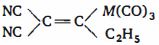
[Molar mass of glucose in $\mathrm{g} \mathrm{mol}^{-1}=180$ ]

$1. \,{H_3}C - \mathop O\limits^ + {H_2} \to CH_3^ + + {H_2}O$
$2.\,{(C{H_3})_3}C - \mathop O\limits^ + {H_2} \to {(C{H_3})_3}{C^ + } + {H_2}O$
$3.\,{(C{H_3})_2}CH - \mathop O\limits^ + {H_2} \to {(C{H_3})_2}C{H^ + } + {H_2}O$