MCQ
Which of the following will form an ideal solution?
  • A
    $C_2H_5OH$ and water
  • B
    $HNO_3$ and water
  • C
    $CHCl_3$ and $CH_3COCH_3$
  • $C_6H_6$ and $C_6H_5CH_3$

Answer

Correct option: D.
$C_6H_6$ and $C_6H_5CH_3$
d
$C _6 H _6$ and $C _6 H _5 CH _3$ will form an ideal solution over the entire range of composition. The bonding interactions among the molecules will be same before and after mixing.

Need a full question paper?

Generate a complete, print-ready paper with questions like this in minutes — across 16+ boards, with answer keys.
Start Generating Free

Similar questions

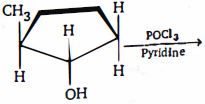
Major product of the reaction is
The compound $\begin{array}{*{20}{c}}
 \,\,\,\ \,\,\,\,\,\,\,\,\,{OH} \\ 
  \,\,\,\,\,\,\,\,| \\ 
  {{{(C{H_3})}_2}.CCC{l_3}} \\ 
  {} 
\end{array}$ is
A mixture of benzaldehyde and formaldehyde on heating with concen. and hot NaOH gives :
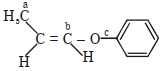
In the following molecules,

$[Image]$

Hybridisation of carbon $a, b$ and $c$ respectively are :
$C{H_3}COOC{H_3} + $ excess $PhMgBr$   $ \to {\text{product}}\xrightarrow{{{H^ + }}}X$  The product $X$ is
A compound contains $1.08\, mol$ of $Na, 0.539\, mol$ of $Cu$ and $2.16\, mol$ of $F.$ Its aqueous solution shows osmotic pressure which is three times that of urea having same molar concentration. The formula of the compound is
The relative reactivities of acyl compounds towards nucleophbstitution are in the order of
What is the isomerism between the complexes $\left[ Co \left( NH _3\right) Br \right] SO _4$ and $\left[ Co \left( NH _3\right)_3 SO _4\right] Br$ ?
The increasing order of the reactivity of the following halides for the $S_N1$ reaction is

$(I)\,\begin{array}{*{20}{c}}
  {C{H_3}CHC{H_2}C{H_3}} \\ 
  {|\,\,\,\,\,\,\,\,\,\,\,} \\ 
  {Cl\,\,\,\,\,\,\,\,\,} 
\end{array}$

$(II)\,CH_3CH_2CH_2Cl$

$(III)\,H_3CO-C_6H_4-CH_2Cl$

Consider the following single step reaction in gas phase at constant temperature.

$2 \mathrm{~A}_{(\mathrm{g})}+\mathrm{B}_{(\mathrm{g})} \rightarrow \mathrm{C}_{(\mathrm{g})}$

The initial rate of the reaction is recorded as $r_1$ when the reaction starts with $1.5 \mathrm{~atm}$ pressure of $\mathrm{A}$ and $0.7 \mathrm{~atm}$ pressure of B. After some time, the rate $r_2$ is recorded when the pressure of $C$ becomes $0.5 \mathrm{~atm}$. The ratio $r_1: r_2$ is $\qquad$ $\times 10^{-1}$.

(Nearest integer)