MCQ
Which of these is a correct definition of conventional current?
  • A
    Current that flows from lower potential to higher potential.
  • B
    The current which remains static.
  • C
    Current constituted by the flow of ions.
  • D
    Current that flows from higher potential to lower potential.
Answer

  1. Current that flows from higher potential to lower potential.

Explanation:

The current that flows from a point at the higher (positive) potential to a point at lower (negative) potential is called conventional current. The direction of motion of positive charges is taken as the direction of electric current.

Need a full question paper?

Generate a complete, print-ready paper with questions like this in minutes — across 16+ boards, with answer keys.

Start Generating Free

Similar questions

The phase difference between input and output voltages of  a CE circuit is

(a) 0o

(b) 90o

(c) 180o

(d) 270o

If in a parallel plate capacitor, which is connected to a battery, we fill dielectrics in whole space of its plates, then which of the following increases?
What happens to the capacitance when a dielectric material is inserted between the plates of a parallel plate capacitor?

To measure which of the following, is a tangent galvanometer used

(a) Charge

(b) Angle

(c) Current

(d) Magnetic intensity

Which of the following change the activity of radioisotope?

The de-Broglie wavelength of a neutron at 27oC is l. What will be its wavelength at 927oC

(a) l / 2  

(b) l / 3

(c) l / 4   

(d) l / 9

When the nucleus of a radioactive element emits an alpha particle, the atomic number is decreased by:

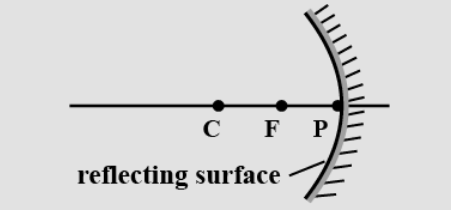
The distance CP is the:

Assertion  :   Semiconductors do not Obey's Ohm's law. 

Reason     : Current is determined by the rate of flow of charge carriers.

(a) If both assertion and reason are true and the reason is the correct explanation of the assertion.

(b) If both assertion and reason are true but reason is not the correct explanation of the assertion.

(c) If assertion is true but reason is false.

(d) If assertion is false but reason is true.

Two equal point charges are fixed at x = -a  and x = +a  on the x-axis. Another point charge Q is placed at the origin. The Change in the electrical potential energy of Q, when it is displaced by a small distance x along the x-axis, is approximately proportional to

(a) x 

(b)  

(c)  

(d) 1/x