MCQ
Which one of the following process is non-spontaneous?
- ADissolution of CuSO4 in water
- BReaction of H2 and O2 to form water
- CWater flowing down hill
- DFlow of electric current from low potential to high potential
Explanation:
The physical or chemical processes which do not proceed by its own in a particular direction and requires outside help is called a non-spontaneous process. Therefore, flow of heat from a cold body to a hot body is a non-spontaneous process as it requires external work as per Clausius.
Generate a complete, print-ready paper with questions like this in minutes — across 16+ boards, with answer keys.
$3p_x,\,2s,\,4d_{xy},\,3s,\,4p_z,\,3p_y,\,4s$
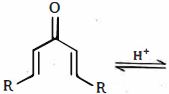
$(i)$ $\begin{array}{*{20}{c}}
{\begin{array}{*{20}{c}}
{\,\,\,\,\,\,\,\,\,\,\,\,\,\,\,\,\,\,\,\,\,\,\,\,\,\,\,\,\,\,\,\,\,\,\,\,\,\,\,\,C{H_3}-CH_2} \\
{\,\,\,\,\,\,\,\,\,\,\,\,\,|}
\end{array}} \\
{C{H_3} - {C^ + }} \\
{\,\,\,\,\,\,\,\,\,\,\,\,\,\,|} \\
{\,\,\,\,\,\,\,\,\,\,\,\,\,\,\,\,\,\,\,\,\,C{H_3}}
\end{array}$
$(ii)$ $\begin{array}{*{20}{c}}
{\begin{array}{*{20}{c}}
{\,\,\,\,\,\,\,\,\,\,\,\,\,\,\,\,\,\,\,\,\,\,C{H_3}} \\
{\,\,\,\,\,\,\,\,\,\,\,\,\,|}
\end{array}} \\
{C{H_3} - {C^ + }} \\
{\,\,\,\,\,\,\,\,\,\,\,\,\,\,|} \\
{\,\,\,\,\,\,\,\,\,\,\,\,\,\,\,\,\,\,{H}}
\end{array}$
$(iii)$ $\begin{array}{*{20}{c}}
{\begin{array}{*{20}{c}}
{\,\,\,\,\,\,\,\,\,\,\,\,\,\,\,\,\,\,\,C{H_3}} \\
{\,\,\,\,\,\,\,\,\,\,\,\,\,|}
\end{array}} \\
{C{H_3} - {C^ + }} \\
{\,\,\,\,\,\,\,\,\,\,\,\,\,\,|} \\
{\,\,\,\,\,\,\,\,\,\,\,\,\,\,\,\,\,\,\,\,\,C{H_3}}
\end{array}$
$(iv)$ $Ph - CH ^{+}-\underline{ CH }_{3}$
$2H_2(g) + O_2(g) \to 2H_2O(l)$ ; $\Delta _fH^o_{298}(H_2O(l)) = -285.5\, kJ/mol$
What is $\Delta S^o_{298}$ for the given fuel cell reaction ?
Given $: O_2(g) + 4H^+(aq) + 4e^- \to 2H_2O(l)$ $E^o = 1.23\, V$