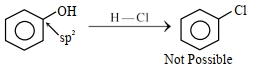
MCQ
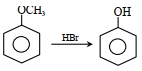
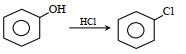
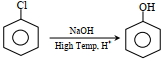
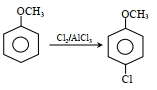
Which one of the following reactions is $NOT$ possible?
  • A


  • C

  • D

Answer

Correct option: B.

b

Need a full question paper?

Generate a complete, print-ready paper with questions like this in minutes — across 16+ boards, with answer keys.

Start Generating Free

Similar questions

The cell constant of a conductivity cell ___________.
In which one of the following metal carbonyls, $\mathrm{CO}$ forms a bridge between metal atoms?
For a chemical reaction, $A + 2B \to C + D$, the rate of reaction increases three times, when concentration of $A$ only is increased nine times. While when concentration of $B$ only is increased $2\, times$, then rate of reaction also increases $2\, times$. The order of this reaction is
Which of the following is the outer orbital complex?
The $IUPAC$ name of the complex $Hg [Co(CNS)_4]$ is
Decreasing order of reactivity of $HX$ in the reaction $ROH + HX \to RX + {H_2}O$
Consider the kinetic data given in the following table for the reaction $A + B + C \rightarrow$ Product.

Experiment No. $\begin{array}{c}{[ A ]} \\ \left( mol dm ^{-3}\right)\end{array}$ $\begin{array}{c}{[ B ]} \\ \left( mol dm ^{-3}\right)\end{array}$ $\begin{array}{c}{[ C]} \\ \left( mol dm ^{-3}\right)\end{array}$ Rate of reaction $\left( mol dm ^{-3} s ^{-1}\right)$
$1$ $0.2$ $0.1$ $0.1$ $6.0 \times 10^{-5}$
$2$ $0.2$ $0.2$ $0.1$ $6.0 \times 10^{-5}$
$3$ $0.2$ $0.1$ $0.2$ $1.2 \times 10^{-4}$
$4$ $0.3$ $0.1$ $0.1$ $9.0 \times 10^{-5}$

The rate of the reaction for $[ A ]=0.15 mol dm ^{-3},[ B ]=0.25 mol dm ^{-3}$ and $[ C ]=0.15 mol dm ^{-3}$ is found to be $Y \times 10^{-5} mol dm d ^{-3} s ^{-1}$. The value of $Y$ i. . . . . . .

Maximum oxidation state central atom is present in
The major product obtained on interaction of phenol with NaOH and $CO _2$ is :
Which compound can exist in a dipolar (zwitter ion) state