MCQ
Which reaction will occur at the fastest rate ?
- A
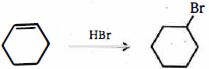
- B
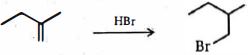
- C
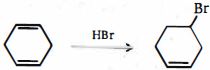
- ✓

Generate a complete, print-ready paper with questions like this in minutes — across 16+ boards, with answer keys.
$(A)$ $SnCl _2 \cdot 2 H _2 O$ is a reducing agent.
$(B)$ $SnO _2$ reacts with $KOH$ to form $K _2\left[ Sn ( OH )_6\right]$.
$(C)$ A solution of $PbCl _2$ in $HCl$ contains $Pb ^{2+}$ and $Cl ^{-}$ions.
$(D)$ The reaction of $Pb _3 O _4$ with hot dilute nitric acid to give $PbO _2$ is a redoxreaction.
${K_p} = 8 \times {10^{ - 2}}$$C{O_{2(g)}} + {C_{(s)}} \to 2C{O_{(g)}}$ ; ${K_p} = 2$
$CaC{{O}_{3(s)}}\xrightarrow{\Delta }Ca{{O}_{(s)}}+C{{O}_{2}}\uparrow $; ${{K}_{p}}=8\times {{10}^{-2}}$
$({K_c} = 1.8 \times {10^{ - 6}}\,{\rm{at}}\,\,184\,^\circ C)$
$(R = 0.0831\,kJ/\,(mol.\,K))$
When ${K_p}$ and ${K_c}$ are compared at $184\,^oC$ it is found that