Question
While walking on ice, one should take small steps to avoid slipping. This is because smaller steps ensure:
  1. Larger friction.
  2. Smaller friction.
  3. Larger normal force.
  4. Smaller normal force.

Answer

  1. Smaller friction.

Explanation:

According to the first law of the limiting friction,

$\text{f}=\mu\text{N}$

where f is the frictional force

$\mu$ is the coefficient of friction

N is the normal reaction force

When we take smaller steps on ice, the normal reaction force exerted by the ice is small. Therefore, the smaller steps ensure smaller friction.

Need a full question paper?

Generate a complete, print-ready paper with questions like this in minutes — across 16+ boards, with answer keys.

Start Generating Free

Similar questions

If T is the surface tension of soap solution, the amount of work done in blowing a soap bubble from a diameter D to a diameter 2D is:
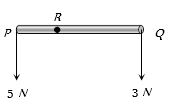
The resultant of the system in the figure is a force of $8N$ parallel to the given force through $R$. The value of $PR$ equals to 
Given that $W = \vec F.\,\vec s\, = 0$ and $F \ne 0\,,\,s \ne 0,$ then
A body moves a distance of $10 \,m$ along a straight line under the action of a force of $5 \,N$. If the work done is $25\, joules$, the angle which the force makes with the direction of motion of the body is.....$^o$
A student performs an experiment to determine the acceleration due to gravity $g$. The student throws a steel ball up with initial velocity $u$ and measures the height $h$ travelled by it at different times $t$. The graph the student should plot on a graph paper to readily obtain the value of $g$ is
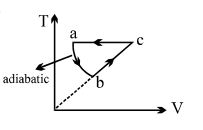
$PV$ curve for the process whose $VT$ curve is
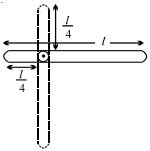
For the pivoted slender rod of length $l$ as shown in figure, the angular velocity as the bar reaches the vertical position after being released in the horizontal position is
A solid cylinder $30\ cm$ in diameter at the top of an inclined plane $2.0\ m$  high is released and rolls down the incline without loss of energy due to friction. Its linear speed at the bottom is.......... $m/\sec$.
$A$ particle is rotated in a vertical circle by connecting it to $a$ light rod of length $l$ and keeping the other end of the rod fixed. The minimum speed of the particle when the light rod is horizontal for which the particle will complete the circle is
A body is just floating on the surface of a liquid. The density of the body is same as that of the liquid. The body is slightly pushed down. What will happen to the body