MCQ
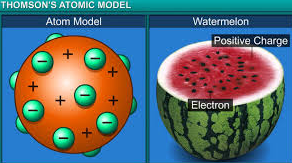
Who was the first scientist to propose a model for the structure of an atom?
- ✓J.J. Thomson
- BDalton
- CErnest Rutherford
- DE. Goldstein
Generate a complete, print-ready paper with questions like this in minutes — across 16+ boards, with answer keys.
$(I)\,C{H_3}O\mathop C\limits^ \oplus {H_2}$ is more stable than $C{H_3}\mathop C\limits^ \oplus {H_2}$
$(II)\,M{e_2}\mathop C\limits^ \oplus H$ is more stable than $C{H_3}C{H_2}\mathop C\limits^ \oplus {H_2}$
$(III)\,C{H_2} = CH - \mathop C\limits^ \oplus {H_2}$ is more stable than $C{H_3}C{H_2}\mathop C\limits^ \oplus {H_2}$
$(IV)\,C{H_2} = \mathop C\limits^ \oplus H$ is more stable than $C{H_3}\mathop C\limits^ \oplus {H_2}$
$H _{2( g )}+ Br _{2( g )} \rightarrow 2 HBr _{( g )}$
Given that bond energy of $H _{2}$ and $Br _{2}$ is $435 \;kJ mol ^{-1}$ and $192 \;kJ mol^{-1}$, respectively, what is the bond energy (in $kJ mol ^{-1}$ ) of $HBr?$