MCQ
Whose name is not associated with the development of Periodic Table
- ALoother Meyer
- BNewlands
- CProut’s
- ✓Rutherford
Generate a complete, print-ready paper with questions like this in minutes — across 16+ boards, with answer keys.
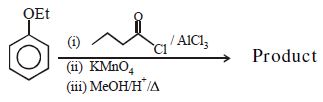
[Atomic Number: $\mathrm{Fe}=26, \mathrm{Mn}=25, \mathrm{Co}=27$ ]
| List-$I$ | List-$II$ |
| ($P$) $ t_{2 g}^6 e_g^0$ | ($1$)$\left[\mathrm{Fe}\left(\mathrm{H}_2 \mathrm{O}\right)_6\right]^{2+}$ |
| ($Q$) $t_{2 g}^3 e_g^2$ | ($2$) $\left[\mathrm{Mn}\left(\mathrm{H}_2 \mathrm{O}\right)_6\right]^{2+}$ |
| ($R$) $e^2 t_2^3$ | ($3$)$\left[\mathrm{Co}\left(\mathrm{NH}_3\right)_6\right]^{3+}$ |
| ($S$) $t_{2 g}^{+} e_g^2$ | ($4$)$\left[\mathrm{FeCl}_4\right]^{-}$ |
| $\left[\mathrm{CoCl}_4\right]^{2-}$ |
Statement $I$ : Aniline does not undergo Friedel-Crafts alkylation reaction.
Statement $II$ : Aniline cannot be prepared through Gabriel synthesis.
In the light of the above statements, choose the correct answer from the options given below:
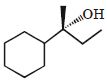
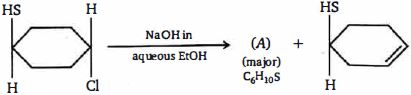
$(I)$ It is easier to remove $2 \mathrm{p}$ electron than $2 \mathrm{s}$ electron
$(II)$ $2 \mathrm{p}$ electron of $\mathrm{B}$ is more shielded from the nucleus by the inner core of electrons than the $2 s$ electrons of $Be.$
$(III)\; 2 s$ electron has more penetration power than $2 \mathrm{p}$ electron.
$(IV)$ atomic radius of $\mathrm{B}$ is more than $\mathrm{Be}$
(Atomic number $\mathrm{B}=5, \mathrm{Be}=4$ )
The correct statements are